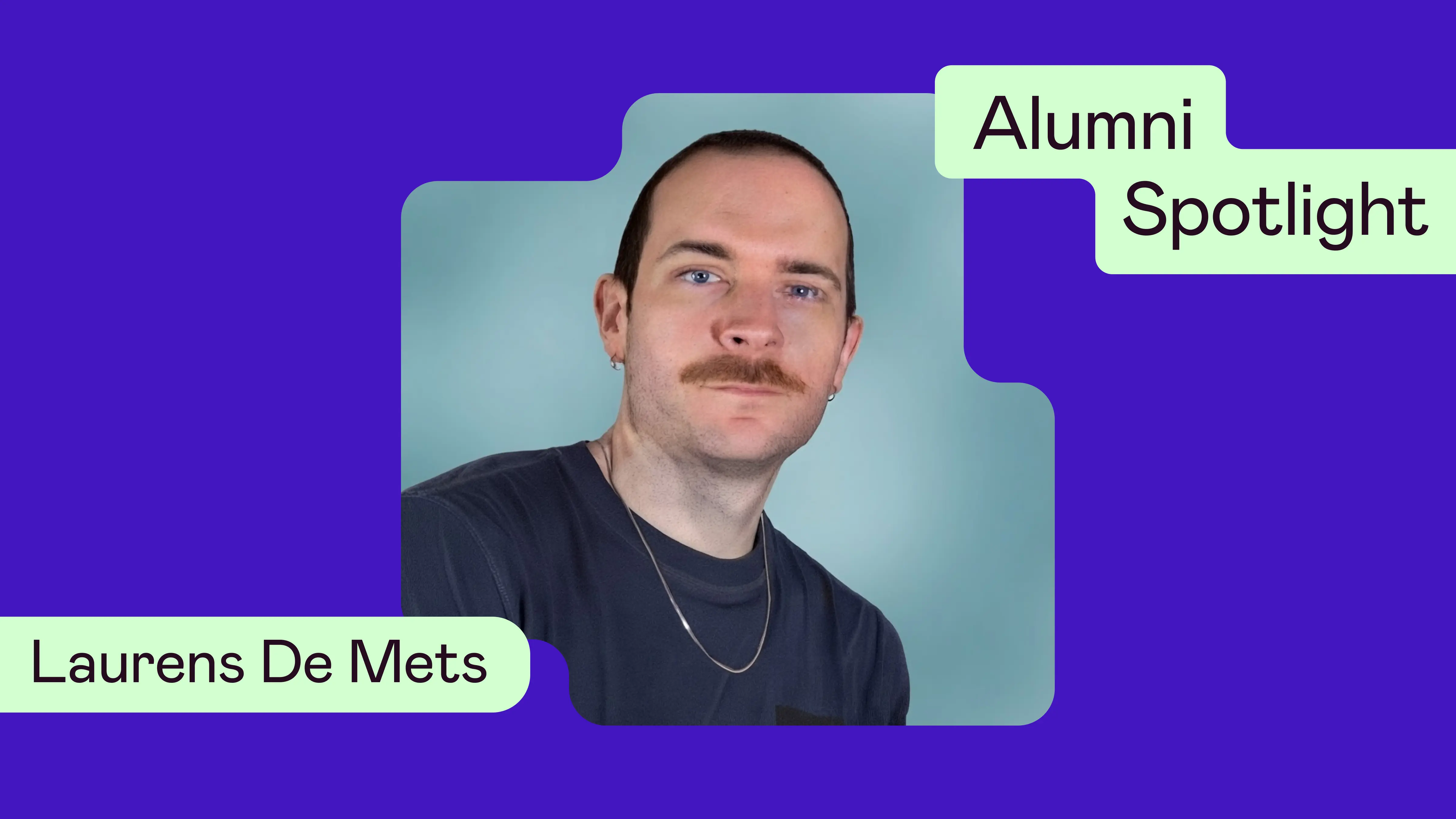


After eight years running a motion design studio, Laurens De Mets knew he wanted something different from the next phase of his design career. The increasingly fast pace of content creation had left him wanting to make work that had a longer lifespan and meant more — products that were user-centric and that he could shape through deeper research and strategic thinking.
That goal led him to product design and UX Academy. Laurens was drawn to Designlab’s hands-on client work and 1:1 mentorship. During the program, he built a portfolio he was proud of, practiced presenting and critiquing work, collaborated on a client project, and began exploring how AI was changing product design workflows.
After graduating, Laurens continued developing his AI prototyping skills while job searching. Less than three months later, he landed a product design role at In The Pocket, a digital product studio in Ghent, Belgium, where AI-first design is central to the work.
What were you doing before UX Academy, and what made you want to move into product design?
I was a motion designer, and I had my own studio that I ran with my brother. That was my first job when I got out of college, and then I did that for eight years.
A lot of it was making content for social media. It used to be that you could work a lot on a one-minute video, it could be polished, and then it would be reused. But these days when you make content, you just put it out in the air and then it kind of disappears very quickly. It’s more about quantity than quality.
I wanted to design something that would last longer and that could be iterated on and would have its own life. Something that doesn’t just disappear once it’s finished.
Also, strategic thinking next to designing — creative strategies, making the budget work, and having different tones of voice in different channels. In order to do that, it’s important to talk to people and learn more about brands and products.
So on one hand, that kind of research thing and more thinking strategically, and then also wanting to design something that would last longer and have more impact. Those are the two main things that made me decide to pivot within design — research and strategic thinking, and wanting to design something that would have more impact. And so I ended up in product design.
I wanted to design something that would last longer and that could be iterated on and would have its own life.
Why did you choose Designlab for your education?
I knew someone who attended a UX program through another organization during Covid, and he was happy with it. But I’ve always been more someone who studies by myself and at my own tempo, and when I was comparing programs, I felt Designlab was more aligned with my way of working.
Also, I think mentorship is really, really important. Back when I went to college, some of the classes had teachers who were active in the field, and I thought those teachers were more interesting to talk to. It’s nice to learn about how you will actually apply the content of the course.
What was your experience with your UX Academy mentor?
The mentor's experience in the field is incredibly valuable to tap into and to better understand the course content.
Brad Stricker was my mentor. I found it hard to imagine how some parts of the course would translate to real-life work-situations, and Brad was very good in helping me understand that. If I didn’t get something, I asked how he used it and what he learned from it — it’s always easier to understand if it’s applied.
He was also very good at letting me do my best work, rather than changing my work into something he'd make. When showing my work, he [made suggestions], but he was very aware about taste. If he knew that I wanted to achieve a certain thing, and I showed him which direction I wanted to go, then he would help me get there.
My mentor was very good at letting me do my best work, rather than changing my work into something he’d make.
What did you think of the Group Crits?
I really liked Group Crits. Having a very limited time to explain your work forces you to truly understand your own project and synthesise the most important information.
You learn to present in a few minutes, and if you don’t do it well, then you won’t have any useful feedback. So you really learn really quickly to make everything clear, what you want help on.
Where I work now, there’s about fifteen designers. Because all the designers are spread among different teams, for one hour each week, through a call, everyone gets fifteen minutes to present what they’re doing and to ask for help. So it’s literally Group Crits!
It’s definitely like introducing people to your project that you’ve worked twenty hours on — what do they need to know in two minutes? What is the most important thing that they need to know to give feedback where you want feedback?
Did the UX Academy community play a role in your experience?
I met many fellow designers in the Discord and through Group Crits. It was really handy to get in touch with fellow students. I worked a lot with others who needed help, and there are people that I did usability tests with, and you get to know each other and just talk about stuff.
I also met two people in real life. One fellow student I met in a group was traveling to Ghent, so we had lunch. And a mentor from Career Services is from Belgium, and we got together as well.
How did the Client Capstone contribute to your portfolio?
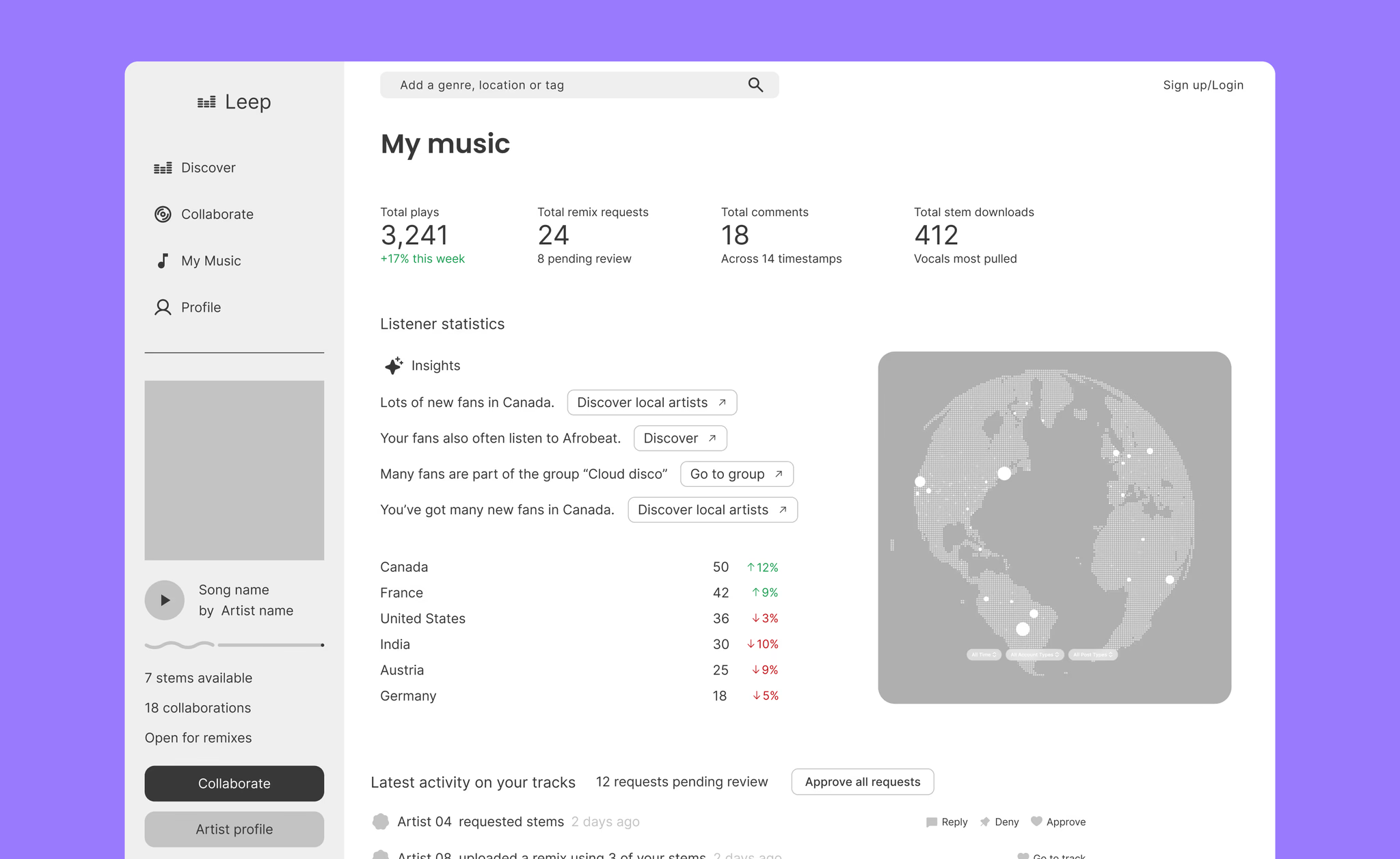
I was mainly in charge of project management and making the wireframes. I was really happy with the portfolio that I built. It felt like a great body of work to have made in like seven months.
When I did job interviews, being able to say that I have worked for clients and in teams was a big benefit. They would always ask about that. The fact that it was a client project was also really important, and it just was an experience that I learned a lot from. There are lots of differences with presenting product design work compared to motion design work, and I have a lot of experience presenting motion design work.
Now, at my job, I have to start presenting projects to different clients. The fact that there was client experience in the program is super helpful.
When I did job interviews, being able to say that I have worked for clients and in teams was a big benefit. They would always ask about that.
What was your experience with Career Services?
My mentor in Career Services [was Flemish], and that really helped a lot because he knew a lot of the companies that I was applying for. It’s a really small world here in Belgium. He even knew some people at the companies where I applied.
I applied to some agencies and some corporate places. I don’t have any experience with corporate settings or consultancy settings, and he helped to explain which companies are related and who they work with.
Sven was also really helpful in going through the interview stages. I was invited for an hour-long meeting at one of those companies, and I wasn’t really sure what they expected from me. And Sven said, 90% chance, it’s going to be a case study, and you’ll have to talk about this and that. And it was a case study conversation, and we had prepared for it. So it helps a lot to have that predictability, self-confidence, and to be prepared.
What was the job search like after graduating?
It feels like it took a long time, but it was less than three months. I can’t complain! It went really smoothly, I think.
I did seven interviews. [The job I got] was at one of the first companies, but their whole process took about two months.
You very quickly get an idea of how a consultancy company is different from one with in-house designers or an agency. They all have very different things that they find important. But it was quickly clear that the agency setting would be a better fit for my profile. Because I was self-employed, they really want people that don’t need a lot of direction.
So tell us about your new role. What are you working on?
They’re called In The Pocket, based in Ghent. I think it’s one of the oldest product design studios here. They started out as a mobile company, hence the name. Then they expanded to online platforms. And now they’re AI-first, guiding companies in transforming to AI workflows, but they’re also a product studio.
So far I’ve been working on two websites, and I’ve also started working for a big insurance company, building out a platform for brokers. It’s more like the deeper investigating, UX research stuff. It’s a project that will take three or four years. So it’s really deep. With the websites, it’s more like, we need something in two days. It’s very different.
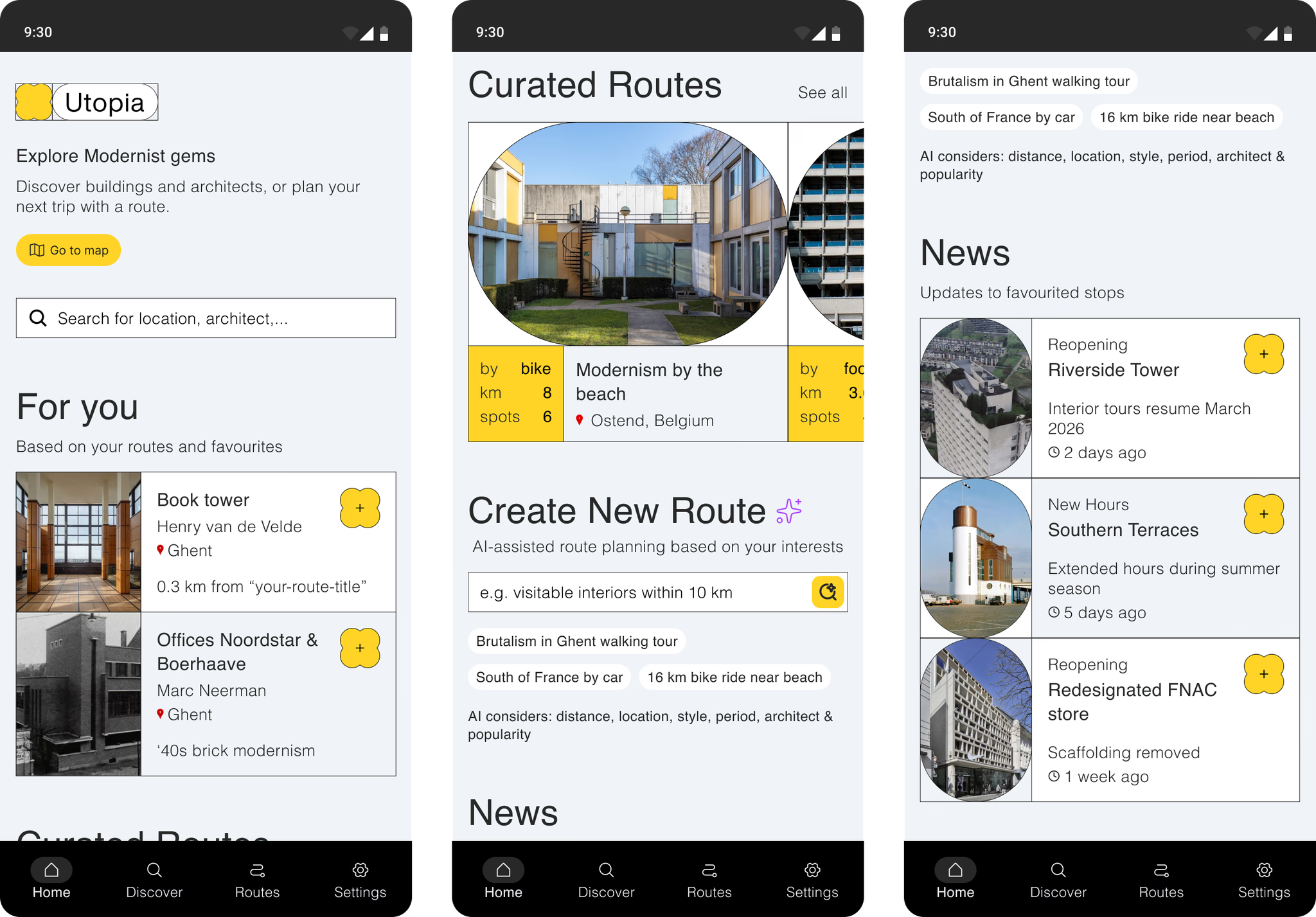
AI prototyping is really important in my job. When we have the first meeting, we want to show an interactive prototype. So we have two days to make a prototype that has user flows built in and is interactive. That’s really their vision for the role of product designers: instantly showing something interactive.
Was working with AI something you intentionally pursued as you entered product design, or did you just happen to land there?
Almost every step of the way since September, since I started the course, I was actively looking for ways to integrate AI in every step.
The Designlab course mimics the way the work happens. It’s so practical. And after graduating, I kept learning more about AI prototyping. You can’t send out job applications eight hours a day, so I think two, three days a week I was working full-time on end-to-end applications, continuing to build out my case studies, and building everything with AI.
The onsite test I did [for my job interview] was exactly what I was practicing. So AI applications in business was something that I was actively looking for and they also were looking for.
The Designlab course mimics the way the work happens. It’s so practical.
What advice would you give someone making the transition into UX or product design today?
I know AI is mentioned a lot. It was an opportunity for me because I really focused on that part, and I was tested for it.
I’ve heard that product designers who are more experienced are struggling with moving to these new workflows. But it’s a necessity now, and there really is opportunity there.
This case study has been edited slightly for clarity.


.webp)

.webp)