.webp)


.svg)
A new, multi-part certification led by working practitioners — where hands-on projects and real-world workflows help you build practical AI capability that translates to your day-to-day work.

In the Era of AI, You Can React — or Take the Lead.
AI is already reshaping how products are designed and built. The question isn’t whether to use AI, but how to use it effectively in real work.
Most designers are experimenting in fragmented, ad hoc ways that don’t translate into meaningful progress. What matters is having a clear, structured approach — one that turns AI into a practical advantage, not just another tool.
Whether you're trying to stay current, move faster, or take on more complex work — the AI Product Design Certification is built to help you do exactly that through real workflows, not theory.
A Complete System for Designing with (and for) AI.
Building real capability with AI means more than learning a single tool or workflow. This program brings together everything you need — from using AI in your design process, to rapid prototyping, to designing AI-powered products — into one flexible learning track.

Program Capstone
The certification culminates in a self-directed capstone project that brings everything together.
Praise for the Courses in the Certification:
Design Ops,
Dell

"The content provided is extensive and valuable... An engaging learning experience. Thank you to Designlab and my mentor, Garren for all the support!"
Sr. Prod Designer, Ancestry
"This course helped me understand how to leverage Claude Code as a valuable tool for design exploration, planning, and facilitating more effective developer handoffs. I loved the slideshow presentations, the office hours and slack channel to connect with peers and instructor."
Design Director,
SmartCommerce
"I really enjoyed the presentations. They were clear and informative and made the work highly actionable. [The course] really has helped me create a structure for how I will approach AI product design in the future."
Design Ops,
Dell
"The content provided is extensive and valuable... An engaging learning experience. Thank you to Designlab and my mentor, Garren for all the support!"
Sr. Prod Designer, Ancestry
"This course helped me understand how to leverage Claude Code as a valuable tool for design exploration, planning, and facilitating more effective developer handoffs. I loved the slideshow presentations, the office hours and slack channel to connect with peers and instructor."
Design Director,
SmartCommerce
"I really enjoyed the presentations. They were clear and informative and made the work highly actionable. [The course] really has helped me create a structure for how I will approach AI product design in the future."
Principal Designer, CVS
"Tasks that usually take two hours now take two minutes. I can now spend time on my strategic work as a principal designer."
Product Designer,
Zelis
"Loved the hands on practice time in each session! Homework assignments were great as well, instructors were great at explaining concepts. I have the tools I need now to leverage Claude and Lovable in my workflows."
UX Engineer
HCSC
"I really liked the deep dive into Figma Make and how we explored multiple paths for turning an idea into a prototype. It helped me understand how much prompting affects the quality of the output, especially when defining the problem, audience, constraints, and desired behavior."
Principal Designer, CVS
"Tasks that usually take two hours now take two minutes. I can now spend time on my strategic work as a principal designer."
Product Designer,
Zelis
"Loved the hands on practice time in each session! Homework assignments were great as well, instructors were great at explaining concepts. I have the tools I need now to leverage Claude and Lovable in my workflows."
UX Engineer
HCSC
"I really liked the deep dive into Figma Make and how we explored multiple paths for turning an idea into a prototype. It helped me understand how much prompting affects the quality of the output, especially when defining the problem, audience, constraints, and desired behavior."
One Program, Designed to Build Real AI Fluency
The AI Product Design Certification helps designers develops two intertwined competencies: designing with AI in your day-to-day process, and designing for AI as the core of modern products. Three courses build the foundation, and a capstone project brings it all together.
You'll start by developing end-to-end AI-augmented design workflows in AI for UX Design — the recommended starting point for building foundational fluency. From there, you'll learn to move from idea to interactive prototype at new speeds in AI Prototyping Camp, and then take on the unique challenges of designing products where AI is the material itself in Designing AI Products.
For those who want to extend beyond design into building, Vibe Coding Camp adds the ability to bring ideas to life as functional software without relying on engineering. It's especially powerful heading into the capstone, where a working prototype unlocks richer user feedback than static mockups allow.
Once you've completed your courses, you'll move into a self-directed capstone project with mentor support — designing an AI-powered product or feature end-to-end while documenting your AI-augmented workflow. The capstone is what transforms the program from a series of courses into a true certification.
You'll have 12 months from enrollment to complete the full program, including the capstone, though motivated learners can complete the program in as little as three months.
Pricing & Enrollment
With the AI Product Design Certification you'll save up to $1,200 off the value of the individual components of the program.
Prefer to pay over time? Both paths can be split into four monthly payments — talk to admissions.
DESIGN TRACK
DESIGN + BUILD TRACK
Already taken one of the courses?
Tell us which courses you've completed and we’ll provide you a personalized enrollment link with credit for your prior coursework.
What You’ll Be Able to Do
YOU WILL LEARN
Meet the Experts Behind the Program.
Each course in the AI Product Design Certification was created in partnership with expert practitioners who bring a wealth of design and teaching experience to their respective program(s).

AI for UX Design
Long-time Designlab mentor Chrissy Welsh has over 20 years of experience across fintech, health-tech, e-commerce, digital product innovation, and AI. She is a design thinker, innovator, and creator. She aims for clarity, simplicity and consistency while leaving space for fun and surprising details for users. Her previous work includes being UX Director at ING analytics & Global UX Directors at Deloitte & Philips.

AI PROTOTYPING CAMP
Nanda Gopal is a Designlab mentor and Principal Designer at a product studio based in Dallas. He specializes in working with early-stage founders and product teams to turn ideas into real, usable products—especially in emerging tech spaces like generative AI. Over the past few years, he's led the design of multiple AI-first platforms, including Homa Health and TrueLaw, and partnered closely with entrepreneurs and enterprise teams to shape zero-to-one products.
.webp)
VIBE CODING CAMP
Christian Eckels is a Product Designer at CNN, working on consumer-facing products across a platform reaching 300M+ monthly users. He also leads product design at Backlit AI, building an agentic AI product from the ground up. He teaches Interaction Design at Santa Monica College, where he developed a vibe coding workshop that takes students from prompt to working app in a single session.

Vibe Coding Camp & AI Prototyping Camp
Jacques Debeuneure is a Senior Manager of UX at Lowe’s, where he leads UX strategy and digital innovation. Previously, he was a Lead Product Designer at Lowe’s, a UX Manager at LendingTree, and a Product Design Manager at Red Ventures for AMEX. He's also designed for brands like ADT Security and Ingersoll Rand.
Designing AI Products
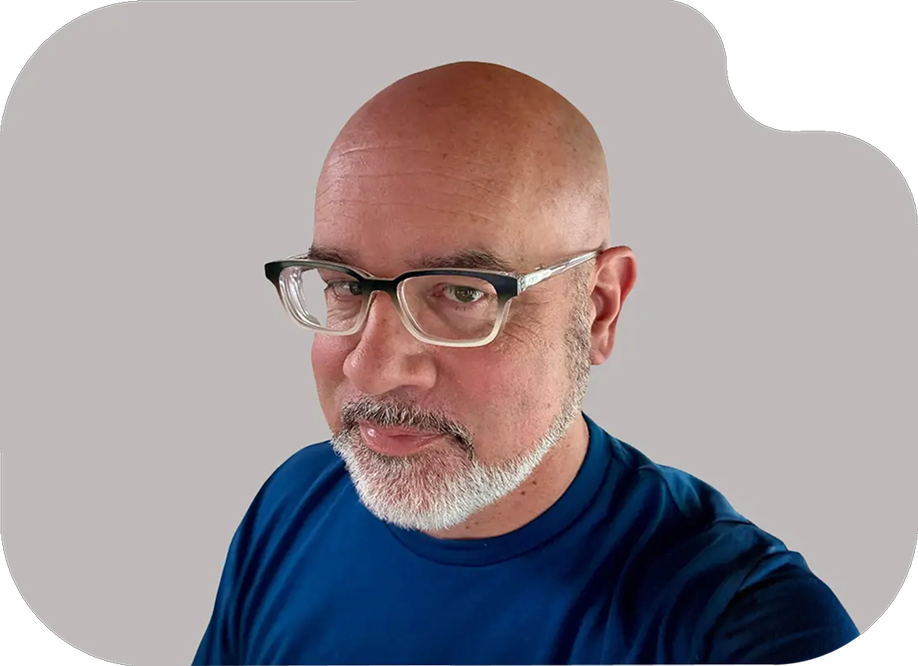
With roots in the practice going back to 1997, Chris Risdon has designed digital and physical services across interaction, service, and behavioral design. The past five years have brought a deep focus on strategy and design for AI in products and services—at IBM Watson, AI healthcare startup Viz.ai, and eBay, where he is their first designer dedicated fully to AI experiences.
A Certification That Reflects How You Work Today.
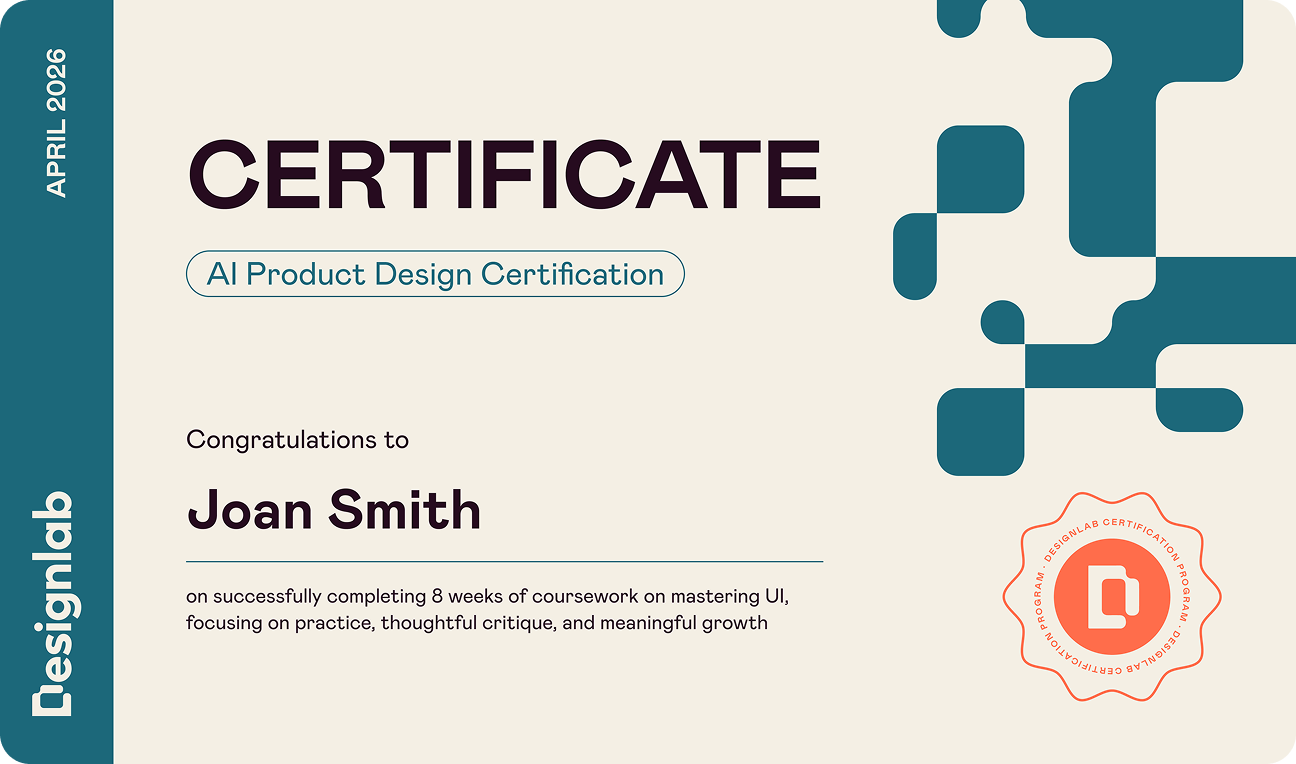
At the end of the program, you’ll receive the AI Design Certification — representing weeks of hands-on work across AI workflows, prototyping, and designing AI-powered features.
It’s something you can showcase, but more importantly, it signals that you’re not just experimenting with AI — you’ve built a clear, practical way of working with it, and the capability to apply it in real-world design roles.
Don’t Just Keep Up — Take the Lead with AI.
AI is already changing how design work gets done. This program is built to help you move beyond scattered experimentation and develop a clear, practical way of working. Join the AI Design Certification and start building your advantage.
Frequently Asked Questions
The AI Product Design Certification is Designlab's advanced credential for designers building real AI capability. It brings together three of our most popular AI courses — AI for UX Design, AI Prototyping Camp, and Designing AI Products — into one coherent program, capped off with a self-directed capstone project available only to certification students. A Design + Build Track adds Vibe Coding Camp for designers who want to extend beyond design into building functional software.
The role is still evolving — definitions vary across companies and the field is moving quickly. That said, the term generally refers to designers who are fluent in two distinct but related areas: using AI as part of their day-to-day design practice (research, ideation, prototyping, visual design), and designing the AI-powered products that are increasingly common across software. The AI Product Design Certification is built around both of these areas — what we think of as designing with AI and designing for AI.
We don't think so — but we also don't think things will stay the same. AI is moving quickly, and no one fully knows how it will reshape design work over the next several years. Our view is that the designers who will be most valuable are the ones with strong fundamentals — UX judgment, craft, taste, the ability to think through complex problems — plus real AI fluency layered on top. AI doesn't replace design judgment; it rewards the designers who already have it. The certification is built for that second half: helping designers who already know how to design develop the AI skills the next generation of product work will demand.
No. Like most things in design, what matters most is what you can actually do — the skills you've built, the work you've shipped, the way you think. The real value of this certification is the learning itself: the AI fluency you develop across your design process, the experience of designing AI-powered products end-to-end, and the portfolio-defining capstone project. The credential is simply a way to communicate that capability to employers, clients, and collaborators — proof that you've done the work, in a form that's easy to share.
The certification is built for working UX and product designers who want to develop real, applied AI capability. It's ideal for:
- Mid-senior UX and product designers (2–10+ years) who want to integrate AI into their daily process and prepare for the next wave of product work.
- Design leads who want to model AI fluency for their teams and guide adoption thoughtfully.
- Independent designers and consultants looking to expand what they can offer clients.
- PMs and founders with design responsibilities who want to ship better AI-powered products.
This is not an introductory design program — students should have solid UX or product design fundamentals coming in. No prior AI experience is required.
The Design Track includes three core courses (AI for UX Design, AI Prototyping Camp, Designing AI Products) plus the capstone project. It's built for designers who want to develop full AI fluency across their design practice.
The Design + Build Track includes everything in the Design Track, plus Vibe Coding Camp — a live intensive that teaches you to build and ship real software using AI-native tools like Claude Code and Vercel. It's a strong fit for designers who want to extend beyond design into shipping functional software, and it's especially powerful heading into the capstone, where a working prototype unlocks richer user feedback than static mockups allow.
Yes. We recommend starting with AI for UX Design to build foundational fluency, but you're free to take the courses in whatever order fits your schedule. When you enroll in the certification, you'll secure your place across all included courses — and reserve your seat in each cohort whenever you're ready.
You'll begin work on the capstone only after you've completed all of the courses in your track.
You'll have 12 months from enrollment to complete all courses and the capstone, though motivated students should be able to complete the program in 3-4 months. We've found that the best experience tends to come from staying within the 12-month window — the program is designed to feel like a coherent journey rather than a multi-year project.
The capstone is the integrative experience that brings the whole certification together. Once you've completed your courses, you'll work on a self-directed project where you design an AI-powered product or feature end-to-end while documenting your use of AI tools and workflows throughout the process. During your time working on the capstone you'll have two one-on-one mentor sessions, the first to get approval on your capstone idea and the second to get feedback.
The capstone is required to earn the certification and is not sold separately. The deliverable is a portfolio-ready case study and high-fidelity prototype — designed to be a defining piece of work you can show employers, clients, and collaborators.
Yes. Once you've completed all required courses and the mentor-reviewed capstone, you'll receive the AI Product Design Certification — a credential you can share on LinkedIn, in your portfolio, and with employers or clients.
The four courses in the certification run in two distinct formats:
- AI for UX Design and Designing AI Products are 4-week structured async courses. Each week includes a 90-minute live lecture (attend live or watch the recording), asynchronous lessons and exercises, hands-on project work, and a 60-minute mentor-led peer group session.
- AI Prototyping Camp and Vibe Coding Camp are 4-week live intensives. Each course consists of 4 days of instructor-led live sessions (~3 hours each), combining demos, guided practice, and hands-on time with the tools.
The capstone is fully self-directed with two 1:1 mentor checkpoints.
- Design Track: $2,195
- Design + Build Track: $2,695
Promotional pricing may be available at the time of enrollment. Check the enrollment page or speak with admissions for current offers, to talk through flexible payment plans, and more.
Yes. Our goal is to make our programs as accessible as possible so we do offer a payment plan that allows participants to break their tuition into four monthly payments, interest free. For more details set up a call with our admissions team or email us at advanced.admissions@designlab.com.
Yes — and you'll receive special pricing in recognition of your prior coursework. To get started, fill out this short form to retrieve a personalized enrollment link with your special pricing applied.
If you've completed three or more of the courses in the certification, please reach out to admissions directly so we can put together the right plan for you. And if you have any questions about alumni pricing, our admissions team is happy to help.
Absolutely — many of our students do. If you have questions about how to submit the certification for reimbursement, reach out to admissions and we can help. To make things easier, feel free to copy, paste, and edit the email template below when requesting approval from your manager:
***
Hi {Manager Name},
I'd like to enroll in the AI Product Design Certification at Designlab, a platform that has trained thousands of designers working at companies like Google, Meta, IBM, Amazon, and Apple. I'm hoping to use my learning & development budget to cover the cost.
The certification develops two core capabilities that are increasingly important to my role: using AI to accelerate my design work, and designing AI-powered products end-to-end. It includes:
- AI for UX Design — Integrating AI across the full UX workflow, from research to prototyping to testing.
- AI Prototyping Camp — Using leading AI tools to move from idea to interactive prototype quickly.
- Designing AI Products — Frameworks and patterns for designing products where AI is the material.
- (Optional) Vibe Coding Camp — Building and shipping functional software using AI-native tools.
- A self-directed capstone project with 1:1 mentor support — designing an AI-powered product end-to-end and producing a portfolio-defining case study.
The certification costs $2,195 USD (Design Track) or $2,695 USD (Design + Build Track, which adds Vibe Coding Camp). Students have up to 12 months to complete the program, which means the time investment can fit alongside ongoing work.
You can find full program details here.
Thanks,
{Your Name}
You can request a full refund within two weeks of the start date of your first cohorted course. After that point, refunds are not generally offered.
We're happy to work with teams. Reach out to our admissions team to discuss multi-seat enrollments, group rates, or custom training arrangements for your organization.


