

Design shapes how people behave, what they choose, and even how they spend their time. That puts designers in a unique position of influence, and with it, real responsibility for the products we ship.
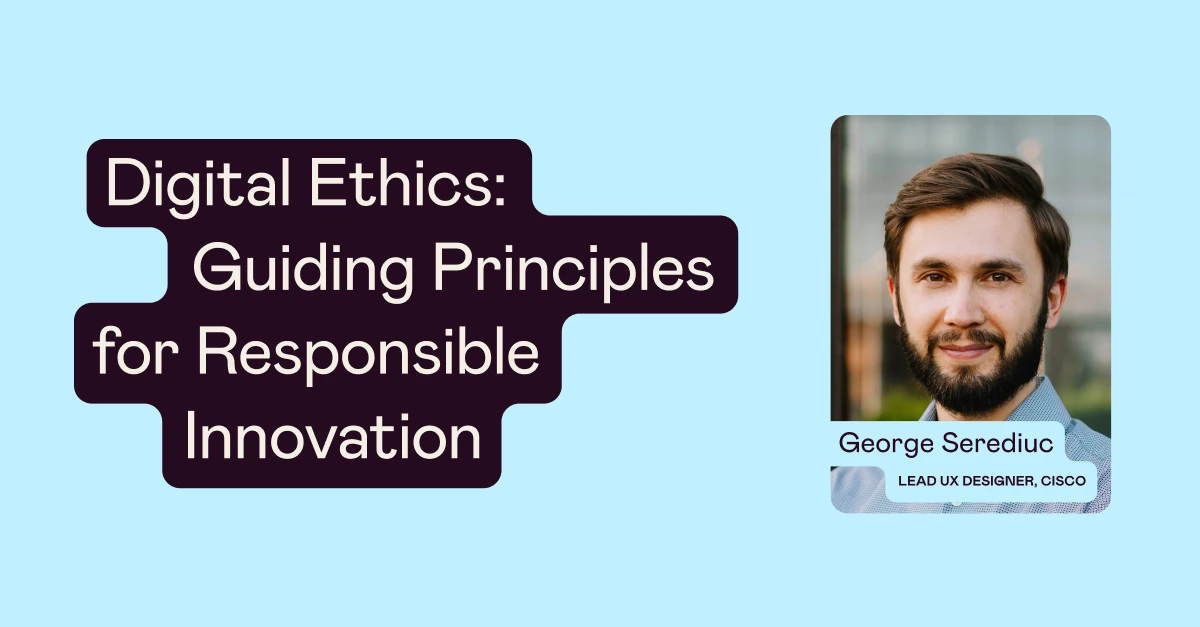
That was the core message of our recent live event, Digital Ethics: Guiding Principles for Responsible Innovation, led by product designer George Serediuc. Ethics conversations often blur terms like fairness, responsibility and respect without real structure. George shared practical frameworks he's developed over more than a decade to make ethical design concrete and usable in everyday product work.
Watch the full recording below, then read on for a recap of what was covered.
Meet the speaker
George Serediuc is a digital product designer with 16+ years of experience creating human-centered products across cybersecurity, open science, public safety and AI-powered tools. He currently leads the Email Security design team at Cisco, where he focuses on AI-powered tools that stop cybersecurity attacks. He is also a mentor, published author, and speaker on digital ethics, product thinking and responsible innovation.
Why ethics belongs in everyday design decisions
George opened with the unintended consequences of designing for short-term KPIs. An honest effort to maximize engagement or time in app can grow into patterns that drive addiction, information overload and shorter attention spans. Those choices may hit immediate business goals, but they erode long-term trust and well-being.
That's why he believes designers have to keep asking: Is this technology helping or harming? Are we protecting the vulnerable? Are we considering long-term consequences? Ethical thinking, in his words, is "the path of good decision-making." It means balancing competing values like privacy and security, weighing the interests of diverse groups, and anticipating future impact. And it can't live with designers alone. It has to be built into every phase of product development, alongside engineering, research and business leaders.
The Ethical Design Triad
To make ethics practical, George developed what he calls the Ethical Design Triad. It maps three pillars to three stages of any product's life:
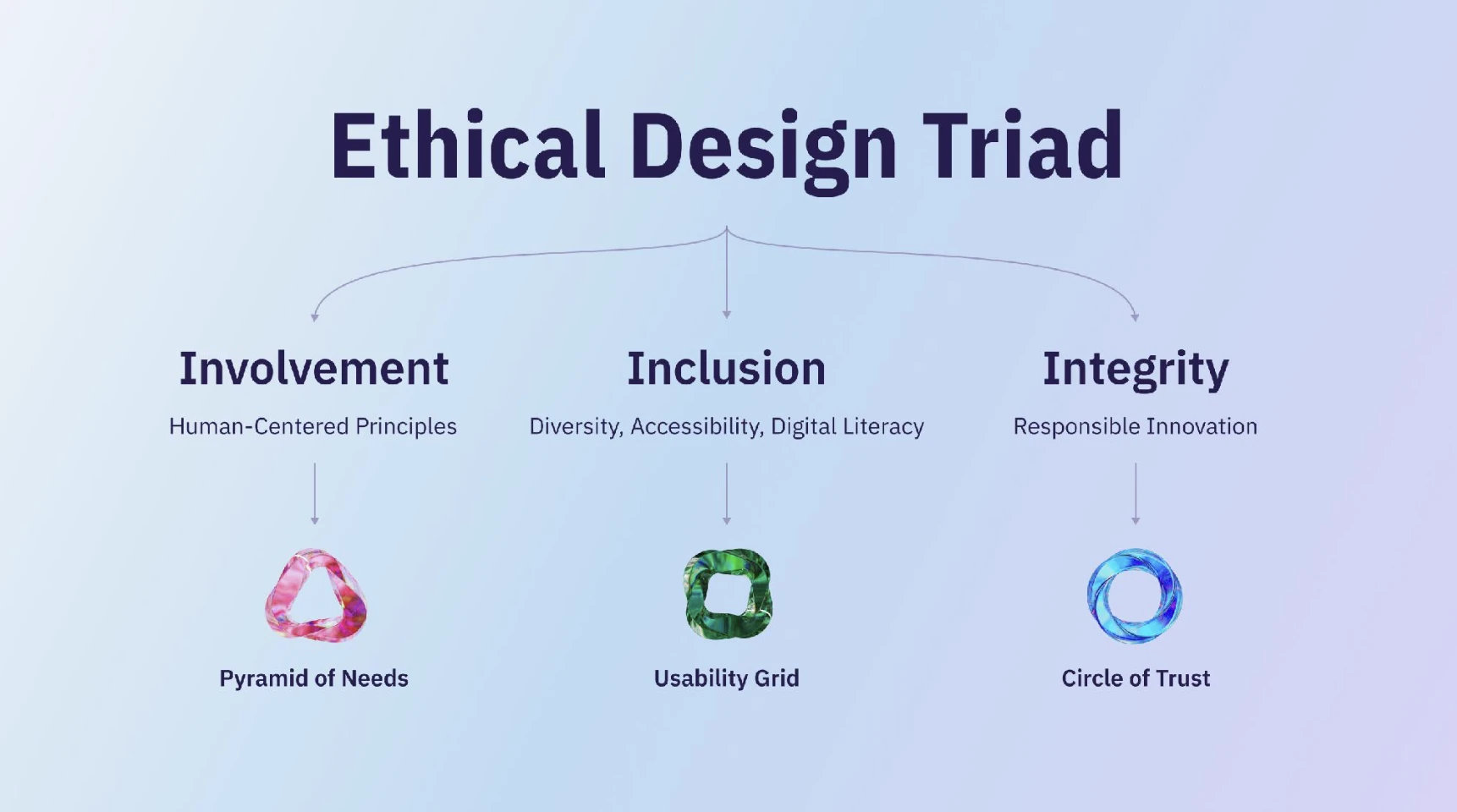
Involvement: design with users, not just for them
George leans on participatory design, which brings users and stakeholders into the heart of the process so solutions come from real needs, not assumptions or abstract business goals. Even experienced designers drop the basics under deadline pressure, he noted, like involving users throughout and evaluating with them. "It's not iterative if you only do it once."
To prioritize needs, he uses a pyramid of needs for technology. It runs from reliable core functionality, up through usability and accessibility, to meaningful, delightful experiences. His tip: don't build it one layer at a time. Address every layer in proportion from the start, which he calls a "minimum viable pyramid."
Inclusion: ask who's being left out
Inclusive design starts with one question: who can't use this, and why? George groups the answer into three factors:
- Digital literacy. How easy a product feels depends on how comfortable someone is with technology.
- Diversity. Designers often build for a narrow slice of people. Bringing in underrepresented perspectives makes products work across cultures and backgrounds.
- Accessibility. Ignoring it doesn't just skip a design principle. It actively excludes millions of people.
He also encouraged teams to treat disability as a spectrum, not a yes or no. People face permanent, temporary and situational challenges. His "spectrum of disability" tool maps each persona across that range to catch barriers early, and his usability grid adds digital literacy, background and accessibility needs to the traditional persona.
Integrity: build for trust
"Trust is no longer nice to have," George said. Customers expect personalization, but not at the cost of their privacy. His Circle of Trust groups seven principles that support responsible innovation: safety, security, privacy, transparency, fairness, accountability and sustainability. In practice, that means collecting only the data you need, making cancellation and privacy settings easy, avoiding deceptive patterns, and asking who benefits and who is harmed.
Those principles matter even more with AI, which now affects people's rights, opportunities and sense of agency. George's advice: raise ethical questions as early as problem definition, not at the compliance check. Prototype edge cases and failure modes, not just the happy path. Test with people with disabilities and people outside Western datasets. And design interfaces that signal uncertainty, explain limitations in plain language, and let users challenge or override AI decisions.
Making the case for ethical design
In the audience Q&A, an attendee asked how to show the business impact of ethical design. George suggested three approaches: bring real user reactions to your concept in front of decision-makers, use your expertise to flag the risks a decision may create, and measure impact after launch so you can show when something is heading the wrong way and propose a fix.
Check out additional design talks and workshops on our Events page.