

📰 3 THINGS TO CHECK OUT
How a Skeptical Senior Designer Started Rethinking What His Design System Could Do — With AI
- When Blue Cross Blue Shield started encouraging teams to adopt AI, Senior Designer Corey Miller wasn't convinced at first. Instead of risking falling behind, he decided to dig deeper, and after enrolling in AI Prototyping Camp, he discovered AI workflows that changed how he prototypes, collaborates, and thinks about the future of design systems.
- Corey now uses the techniques he learned to rapidly build functional prototypes, improve design-to-development handoffs, and explore bigger opportunities for his team, like automating entire design-to-production workflows.
- The next cohort of AI Prototyping Camp launches Monday, and we've extended our July 4 sale for only this cohort. Click here to claim your seat and save $150 (or use code JULY4EXTENDED at checkout).
Designing in Regulated Industries
- Andy Bhattacharyya, Principal Designer at McKinsey & Company, points out that some of the world's most consequential products — from banking and insurance to healthcare — are designed in regulated environments, yet most UX education overlooks the skills needed to succeed in them.
- Rather than treating legal and compliance as obstacles, Bhattacharyya encourages designers to bring them into discovery from the start. When regulation is viewed as a user need, not a late-stage constraint, teams can create products that are clearer and easier to trust.
- "The best work you will ever produce in a regulated environment will be invisible — not because it's generic, but because it takes something genuinely difficult and makes it feel effortless and safe."
Generative AI and the Long History of Artistic Automation
- Meta Product Design Manager and writer Joshua Leigh asserts that today's debates around generative AI aren't unprecedented. Throughout history — from the camera obscura and Renaissance ateliers to photography and synthesizers — new creative tools have repeatedly sparked fears that technology would diminish artistic skill.
- Leigh suggests that AI continues a long tradition of shifting artists toward higher-value work. As the "how" of the work becomes easier, human contribution increasingly belongs in ideas, direction, curation, and judgment. At the same time, he acknowledges the real challenges AI creates, including the erosion of traditional apprenticeship paths for emerging creatives.
- "AI is not the end of art; it is the beginning of the most complex atelier in human history."
💜 PORTFOLIO INSPIRATION
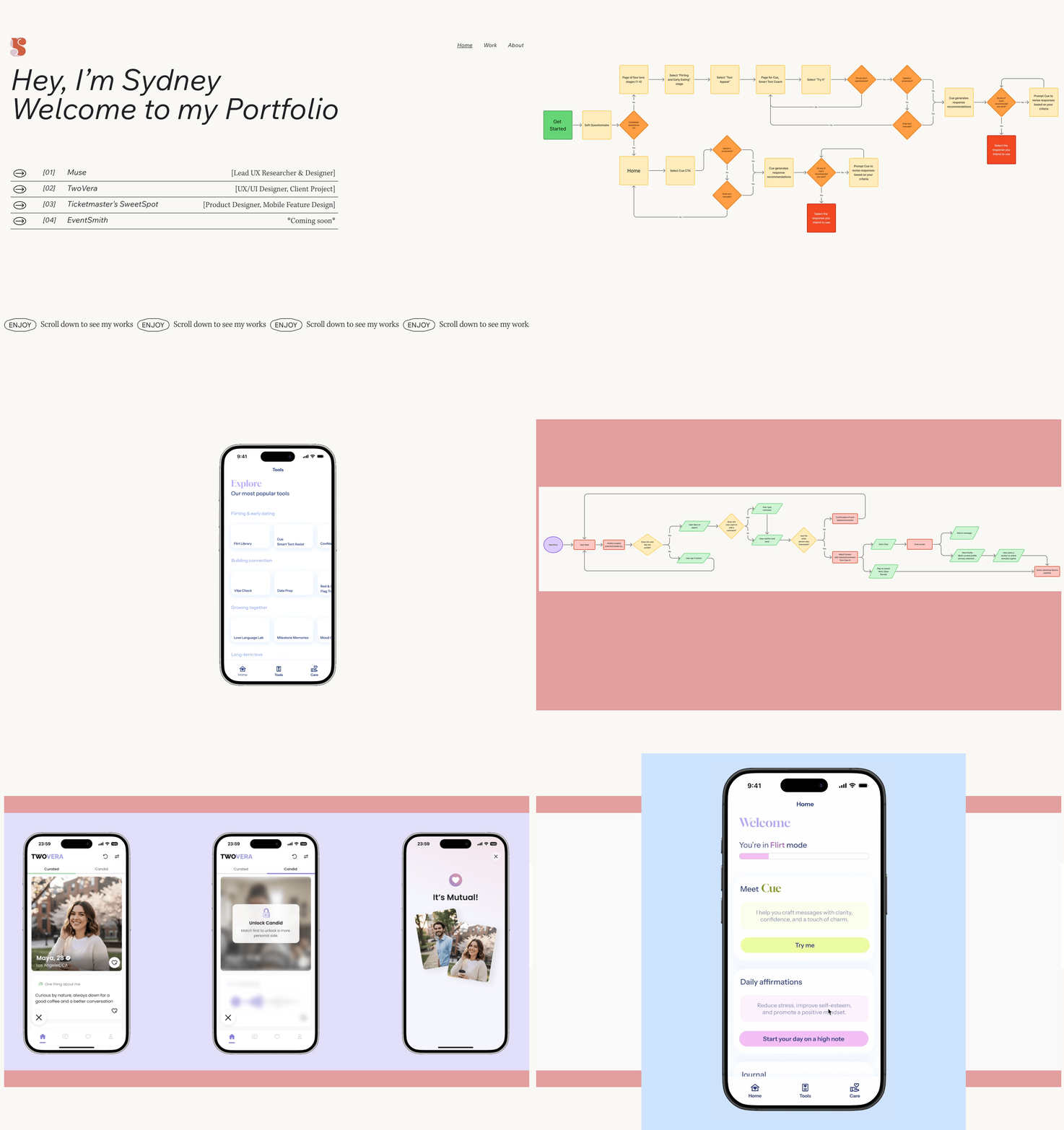
UX Academy graduate Sydney Bell's portfolio shows how design can help people navigate intimately personal experiences. Her project Muse, a relationship coaching app, supports users through every stage of dating with personalized guidance. In her client project TwoVera, she helps create experiences based around authenticity, trust, and meaningful connection. Across her work, Sydney demonstrates a strong research process, polished visual design, and a talent for translating everyday human challenges into products that feel both supportive and intuitive.
💡 INTERESTING STUFF...
- The Top Books and Resources for Product People: Summer 2026
- Users Don’t Need More Tools: They Need Seamless Integrations
- 7 Questions From Config Leadership Collective
- The Crisis of the What
What works good is better that what looks good, because what works good lasts. — Ray Eames, artist and designer
🧪 FROM THE LAB
Join Our Next AI Enablement for Design Teams Webinar
We're hosting another live webinar on AI Enablement for Design Teams on Wednesday, July 15 at 1pm ET. This session is for design leaders, design managers, and design ops professionals who are thinking about what good AI practices would look like in their teams and how to intentionally integrate AI for maximum impact. We'll walk through what we've learned working with thousands of designers across more than 100 design teams. We'll also talk about how Designlab works with teams directly. Register here to join live or get the recording.


.webp)

.png)