📰 3 THINGS TO CHECK OUT
Designing for an Architecture That No Longer Exists
- Senior UX Designer Adrian Levy argues that the familiar interface paradigm—windows, menus, apps, and navigation—is quietly disappearing. AI systems like Claude are shifting work from navigating tools (“how do I do this?”) to expressing goals (“what do I need?”), turning software from something we operate into something that operates with us.
- Levy describes three variables of this new environment: intention, autonomy, and adaptation. Instead of clicking through menus and workflows, users describe what they want, AI systems carry out the work across tools, and the software learns and adapts over time.
- "Designing for orchestration means mapping how intelligence flows across tools, not how users navigate between them. The screen is no longer the unit of design. The intent is."
Affirm SVP of Product Shares 10 Non-Negotiable Rules for Building with AI
- In this article, Affirm SVP of Product Vishal Kapoor shares 10 principles for building trustworthy AI-powered products. His core argument: as AI speeds up product development, teams must stay grounded in first-principles thinking and real customer needs.
- Kapoor suggests treating AI like another teammate on the product team. Tools like Figma Make, Claude, and Cursor help teams prototype faster and explore more ideas—but a unique perspective and intuition remain distinctly human.
- That insight mirrors what we saw in our 2026 State of AI in UX/Product Design survey. As AI disrupts how products get built, designers see judgment, taste, and critical thinking as more crucial than ever. Get the survey report here.
Zero Stage to Orbit: A Reimagined Design-to-Dev Workflow
- Designer, developer, and former digital service expert at NASA, Erika Flowers argues that research → design → dev → QA evolved like multi-stage rockets—each step compensating for translation gaps between teams, with most energy spent managing handoffs rather than building products.
- Flowers describes a workflow where one person works with AI agents to research, design, build, test, and ship in a continuous loop—raising a bigger question: if intent can move directly into working software, do we still need the handoff-driven pipeline at all?
- “The question is: why are you still launching from the ground when orbit is available?”
💜 PORTFOLIO INSPIRATION
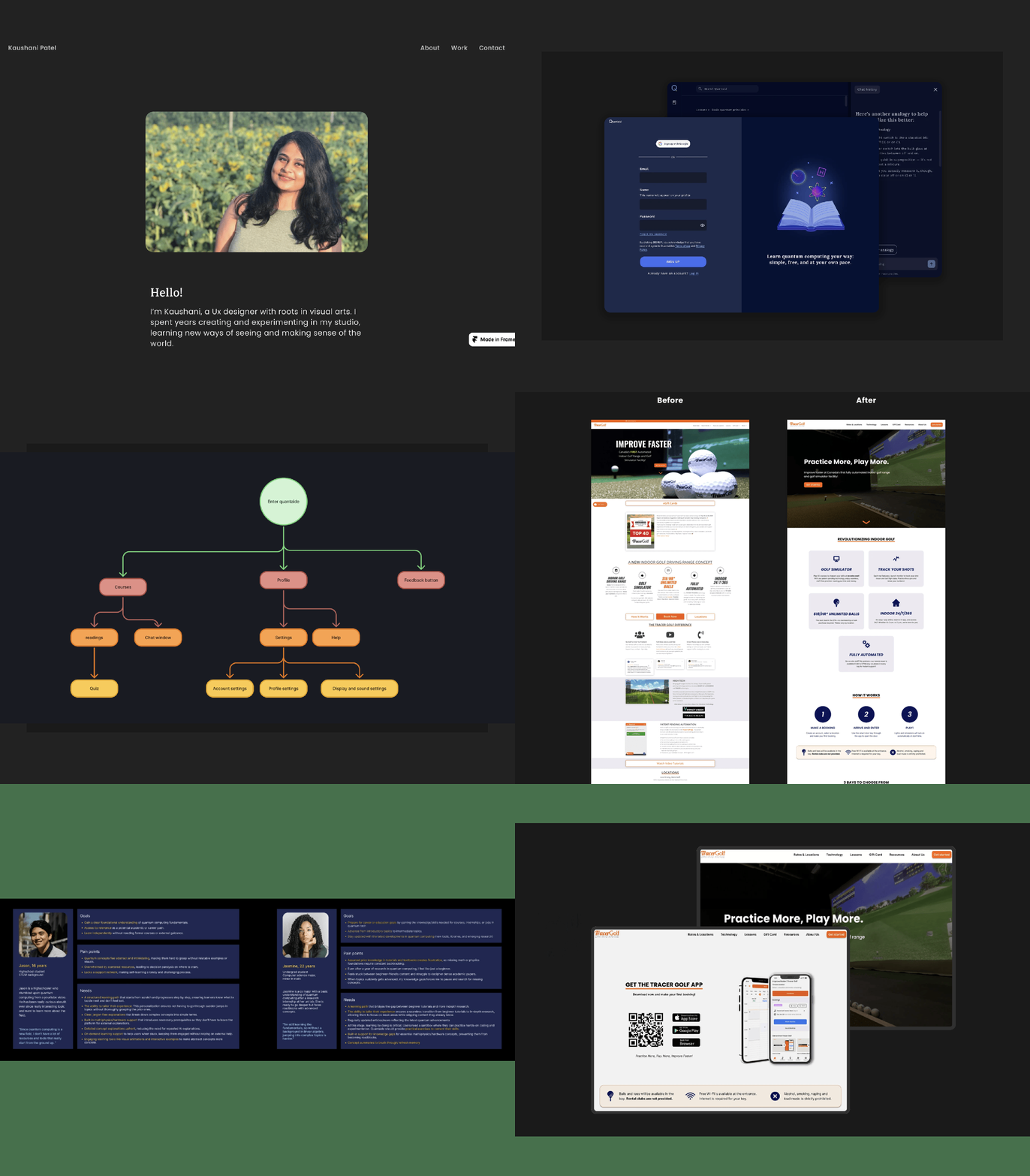
UX Academy graduate Kaushani Patel brings a research-driven mindset to complex problems. Her portfolio shows strong product thinking, balancing user insight, stakeholder constraints, and iterative testing. In Quantaid, she designed an end-to-end learning platform that makes quantum computing more accessible through structured lessons, AI support, and interactive quizzes. In a four-week redesign sprint for an automated golf range, she streamlined navigation, clarified the booking journey, and reorganized information to reduce confusion and support calls. Patel’s case studies clearly show her process, from research and usability testing to iteration and stakeholder collaboration.
Got a portfolio you love that you’d like to share with our audience? Email your suggestions to hello@designlab.com.
💡 INTERESTING STUFF...
- AI Won’t Kill Software
- Brands Need Editors, Not Storytellers
- Architects and Engineers are the Most Automatable Professions According to Anthropic
- Oaxacan Artist Highlights the Undocumented Workers of American Agriculture
I think AI's sense of taste will get better—but someone has to decide what gets built and what matters. — Jenny Wen, Head of Design, Claude
🧪 FROM THE LAB

UX Researcher Nancy Nguyen recently spoke to us about her time in UX Academy, which helped her turn an interest in design into a successful career path. She shares how the structured format, mentorship, design critiques, and mock interviews gave her the skills she was looking for and the confidence she needed—and how that support ultimately helped her land her role at ServiceNow.
If you're looking to break into UX or product design with guidance from experienced mentors and a supportive community, UX Academy will help you get there. Cohorts launch monthly.
Courses Launching Soon
There's just one week left until AI Prototyping Camp—launching March 21st. Built for anyone shaping and building digital products, this fast-paced program takes you from idea to working prototype at the speed of AI.
Across four weekend sessions (3/21, 3/28, 4/4, and 4/11), you’ll get hands-on with Figma Make and Lovable, learn to turn screens into polished flows, and get the chance to scope, prototype, and ship your own mini project. Enroll now.
In Advanced Usability and Accessibility, launching March 27th, you'll deepen your understanding of universal design principles and apply advanced usability and accessibility practices to your work. If you're interested in learning to advocate for inclusive design in your organization, grab your spot now.
Prototyping in Figma launches March 27th. In this 4-week, hands-on course, you’ll move beyond basic wireframes and learn to create high-fidelity, interactive Figma prototypes that communicate clearly to stakeholders and enable seamless handoff to developers. Save your seat now.


.webp)

.png)