

📰 3 THINGS TO CHECK OUT
New Course: Designing AI Products
- Earlier this week, we announced the launch of a new course and the first of its kind at Designlab. Introducing Designing AI Products — a 4-week hands-on course focused on the patterns and frameworks for designing AI products and features.
- Taught in partnership with Chris Risdon, a designer with 20+ years of experience across IBM Watson, Capital One, eBay, and Adaptive Path, you'll learn the patterns, content craft, trust models, and agentic behaviors behind great AI products, and leave with a portfolio-ready capstone that proves you can lead AI product design on your team.
- The course launches May 29, and we're offering a $100 discount for designers who enroll in the first cohort. Join our live info session Monday, May 18 at 12pm ET to learn more, or reserve your seat in the cohort now.
The Prompt Is Not an Interface
- Product designer and writer Joshua Leigh argues that AI tools have regressed interaction design—pushing users back into text-based command lines instead of visual, intuitive interfaces.
- The core issue: prompts require translating visual intent into language, creating friction and information loss—especially for inherently spatial tasks like layout, motion, and composition. But a new wave of tools is pushing back. Platforms like Figma Make, tldraw’s Make Real, ComfyUI, and others embed AI directly into visual canvases, letting designers work through drawing, selecting, and manipulating instead of describing.
- “The most effective AI interfaces do not ask users to describe what they want. They let users show what they mean.”
Ideas are Expensive, Systems are Cheap
- Pavel Bukengolts, design leader and founder of UX Design Lab, explores how AI is shifting design from screens to systems, where value comes from framing problems, connecting workflows, and owning outcomes.
- Modern product work is less about isolated deliverables and more about building connected loops, from idea to prototype to code to learning. Bukengolts shares his modern stack (including his "thinking stack"), shows how a connected surface serves him more than just a pile of apps, and points to the metrics that keep him honest.
- “Patterns are cheap. Ideas are expensive. If you can frame a problem, test it fast, and keep a clean trail of why, you can rebuild anything.”
💜 PORTFOLIO INSPIRATION
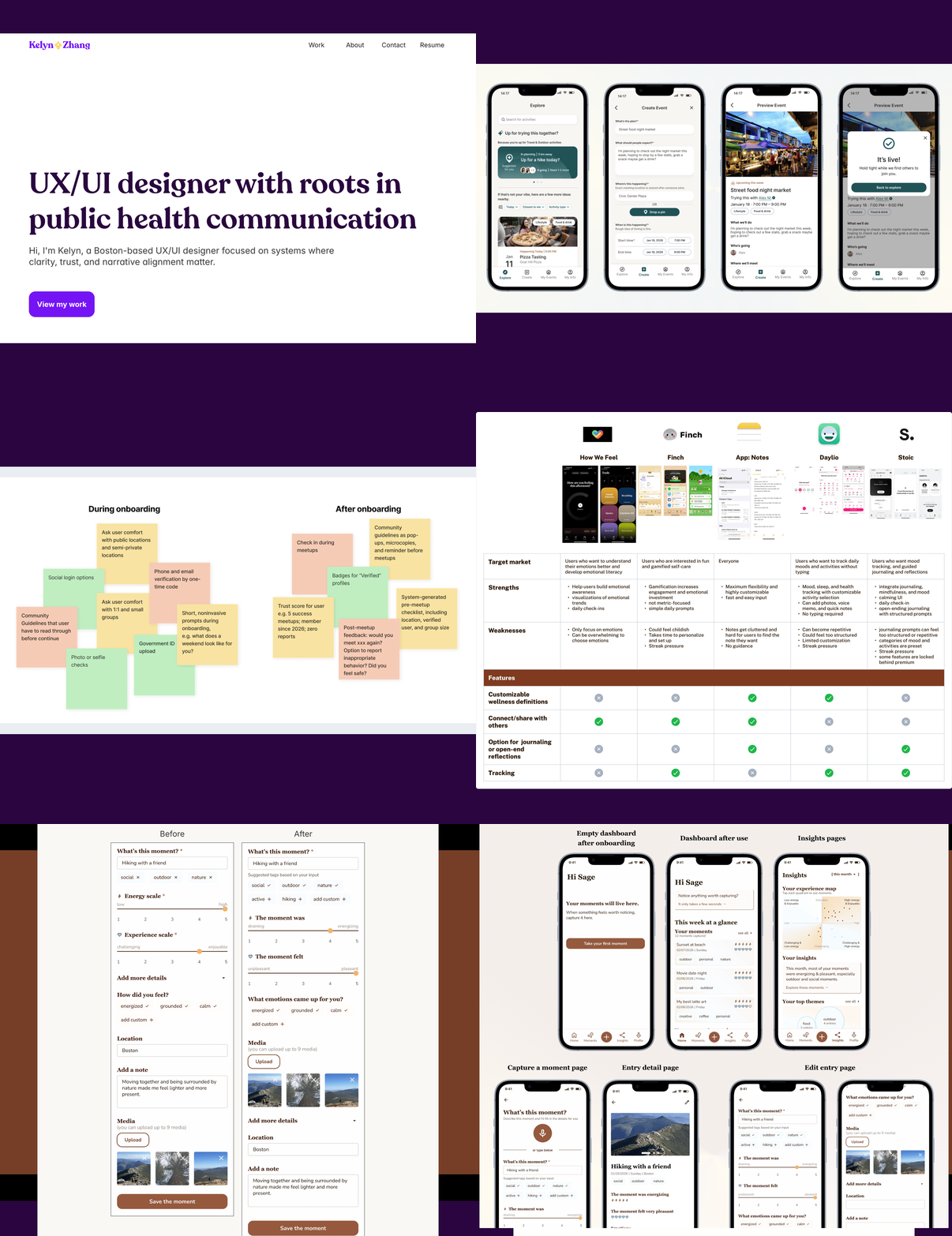
UX Academy graduate Kelyn Zhang brings a systems-driven, yet human approach to UX, shaped by her background in public health and communications. In her project Unveil, an activity-first app focused on helping people say yes to real-world connections, she explores how intentional language, safety signals, and low-pressure flows can encourage connection, turning a complex emotional space into something approachable and actionable. In her project Moments, she challenges the norms of wellness apps by moving away from metrics and toward reflection, designing an experience that prioritizes meaning over measurement. Across her work, Kelyn’s strength lies in her ability to zoom out to the system level while still crafting nuanced, human-centered interactions.
Got a portfolio you love that you’d like to share with our audience? Email your suggestions to hello@designlab.com.
💡 INTERESTING STUFF...
- What the Design-to-Code Loop Unlocks
- Claude Announces Higher Usage Limits
- Data on How AI is Reshaping Product Teams
- How to Stay Confident in a Wobbly Industry
Everyone you will ever meet knows something you don't. — Bill Nye, science communicator, engineer, and author
🧪 FROM THE LAB
Data-Driven Design Starts Next Week
The next cohort of Data-Driven Design kicks off Friday, May 22. This in-depth 6-week course is built for designers who want to integrate data into their design practice and strengthen their strategic impact. You’ll learn how to connect design choices to business outcomes, and present your work in a way that wins over stakeholders.
Join our live informational webinar on Tuesday, May 19 at 1pm ET or enroll now.
Launching Soon: AI for Visual Design
One of our most popular courses, AI for Visual Design, launches May 29. Whether you’re a designer, art director, creative, or other professional, this course shows you how to use today’s top AI models to create and scale production-quality images and video. Across four weeks, you'll build a repeatable AI design practice you can apply across branding, visual design, and your broader creative process.


.webp)

.png)