





For UX/UI designer Hannah Tyransky, the transition from automotive design to user experience wasn’t a sudden leap—it was the natural next step in her long-standing love for the intersection of technology and creativity. After years working in engineering and industrial design, she discovered UX/UI while designing digital interfaces for in-car screens. What began as curiosity eventually became a clear direction, and through UX Academy—and the structure, mentorship, and hands-on projects the program provides—Hannah found the perfect path into a career that feels purposeful, challenging, and deeply fulfilling.
What were you doing before UX Academy, and what motivated you to pursue a UX education?
My background is in mechanical engineering and industrial design. I’ve always loved that intersection of technology and creativity.
Out of college, I worked for an automotive company as an automotive designer. I started on the engineering side and moved into more of a design position, and over time my work shifted from physical design into more digital. Working on interiors and screen interactions was my first introduction to UX/UI. There were always questions like: How are people going to use these? What do they want to see and interact with?
I started investigating UX/UI, loved everything I was finding, but realized I was lacking some hard skills and a UX portfolio. That’s when I found Designlab!
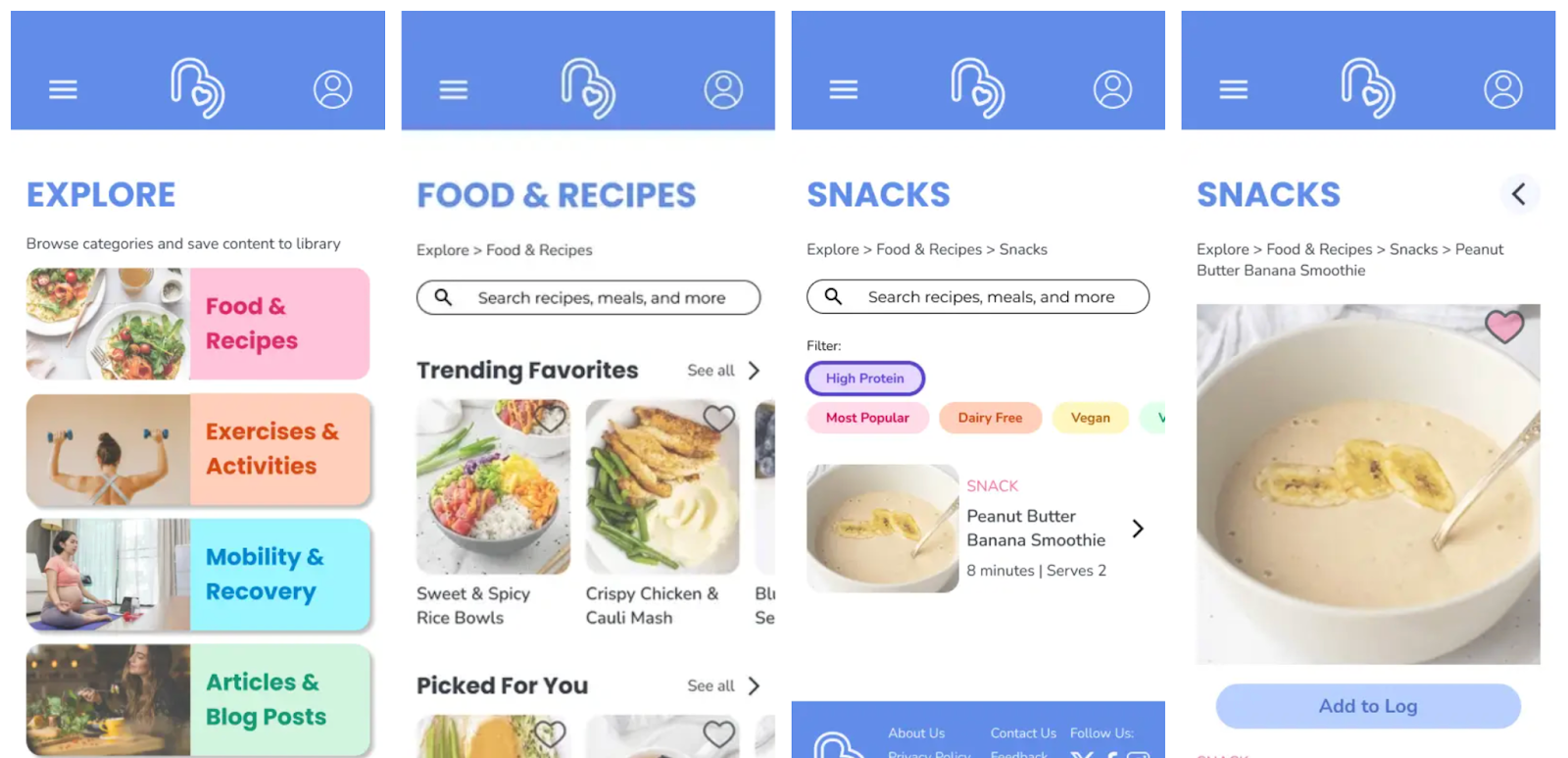
How was your experience in the program overall?
It was fantastic. I cannot say enough great things about everything—from UX Academy Foundations to UX Academy to Career Services. It taught me so many new skills that I could put in my toolbox, and I really appreciated—both with Foundations and UX Academy—that the program is project-focused. I learn quickest when I’m actually doing and putting things into practice.
The way the course was structured also fit me really well. I loved the autonomy—If I wanted to fly through something, I could. If I wanted to take my time, I could. If I needed to lean on my mentor for feedback, I was able to. If I needed to brainstorm with other people, there was the Designlab community.
It was every different type of learning I could have asked for, all rolled into one, but at my pace, which I thought was awesome. If I hadn’t had UX Academy, I wouldn’t be as adequately prepared for the role I’m in now.
How was your experience with your mentor in UX Academy?
He was fantastic. My mentor was James Hoard III, and he had so much experience and knowledge, and my goal was just to tap into that as much as I could. I’d always make sure I could ask as many questions as possible, and he would always take things to the next level—referencing experiences or talking about things I never would’ve considered. He was able to expand my perspective.
My mentor was fantastic… he showed me not to always take things at face value and was really good at introducing alternative perspectives.
What I really appreciated about him is that he would challenge me—not by telling me what to do, but by asking, “Why did you do it this way? Walk me through why you made that decision.” If I said, “I’m not sure,” he’d suggest an alternative, or say, “I’ve seen this before; you might see something like this in the industry.” He showed me not to always take things at face value and was really good at introducing alternative perspectives.
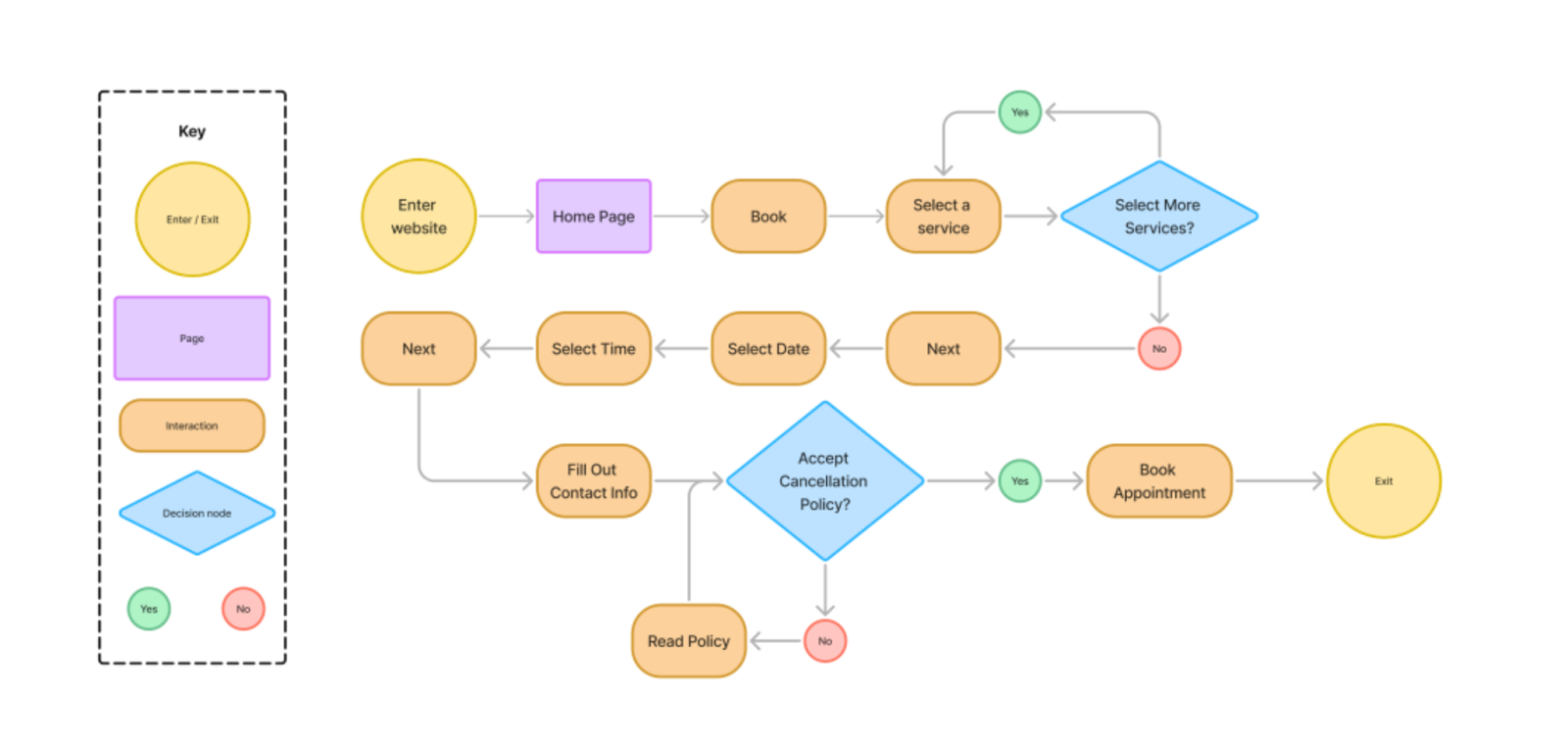
How did you find the Group Crits?
I really valued the Group Crits—it was really cool to see where other people were at in their process, what progress they were making, and how different their styles of working were. It was also great for inspiration. I’m very visual and hands-on, so getting to see what other students had done in their work was really helpful.
Everyone has a different approach—you see someone else’s solution and think: Oh wow, I never would have thought to do it that way. That was inspiring for me to see someone take, for example, a scheduling feature and approach it totally differently than I would have. It also made me feel connected to the broader UX community, which was great for collaboration.
How was your experience with Career Services and the job search?
I had another great mentor, Nicole Locklair, in Career Services. One of the biggest takeaways for me was how important networking really is. I had always thought networking meant going to events and making small talk, but she reframed it completely—she showed me it starts with just one conversation. You talk to someone about what you're interested in, they connect you to someone else, and it continues from there.
I ended up leveraging my network a ton during my job search. The role I’m in now actually came from a casual conversation my husband had with someone at golf, which led to an introduction, which led to another. It turned into this funny little game of telephone that ultimately opened the door to my job.
Career Services helped me see that there’s no magic wand—just small steps and conversations that build momentum.
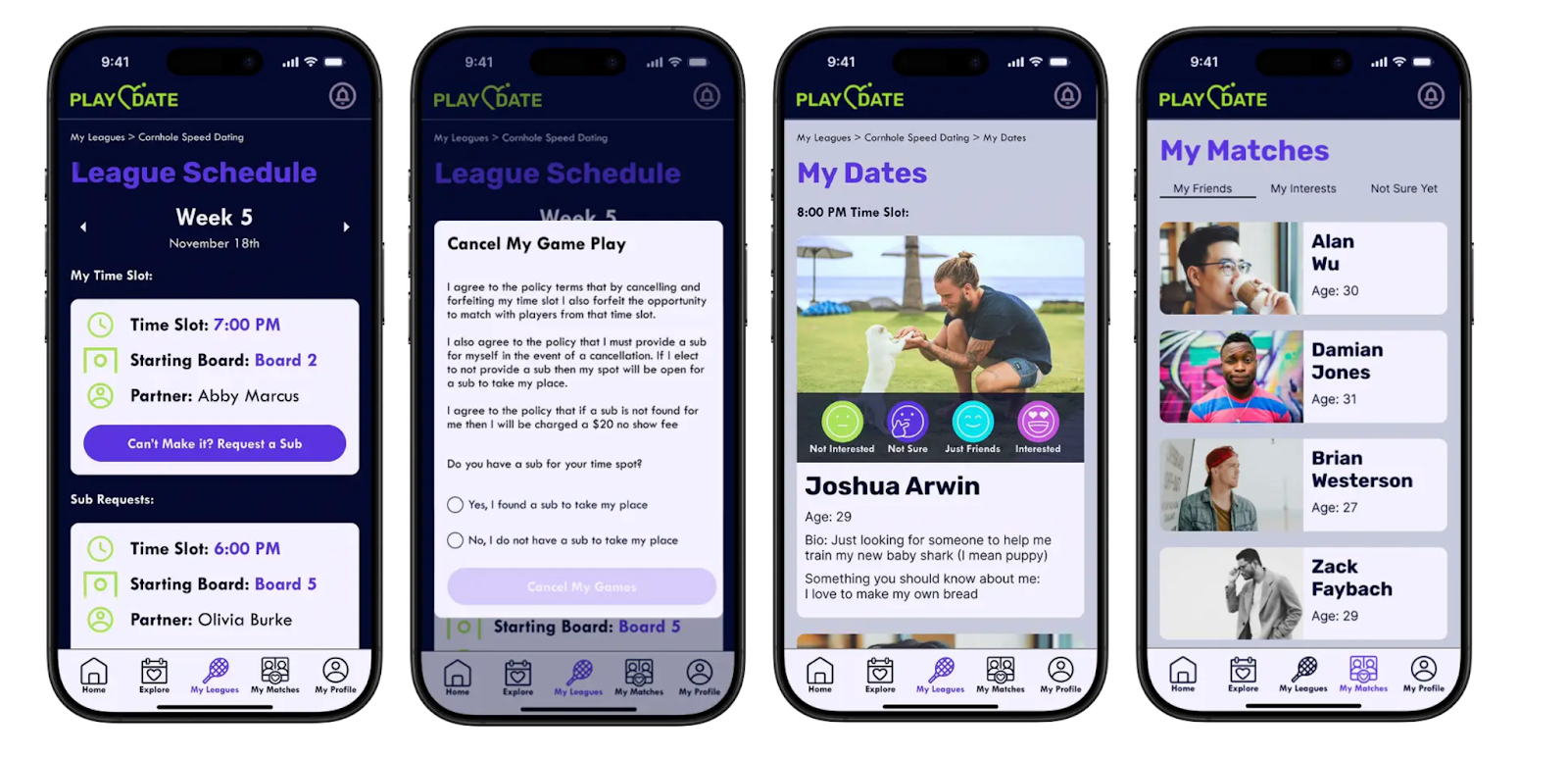
Tell us about your current role in UX. What are you doing now?
I’m a UX/UI designer for a company called Petplace. We work in the animal welfare space, developing software for pet shelters and pet rescues. I’m on the B2B side, and the company is sunsetting a lot of old legacy software, and rolling out brand-new software. I get to be at the forefront of defining what it will look like and what it will be.
It’s very fast-paced, but the culture is great. I’m the only UX/UI designer on the B2B side—there’s one on the customer-facing side—but it’s a small company overall, and I love that feel. I have a lot of autonomy and a lot of authority over decision-making, which is super cool.
I’m still using all the tools I was taught in UX Academy: making wireframes, building prototypes to get ideas across, running brainstorming activities, doing card sorts. When I first got into this role, everything was so largely undefined. The organization was new—no one had been there longer than six months. There was really no process for any of this.
I thought: This is really cool. I get a chance to dictate how this process is going to look for design. Design is valued here; I feel like my voice as a designer is valued, and I get to help drive decisions.
Do you have any advice for anyone thinking about making a career switch into UX?
I always said I wanted to do something with my career that was purposeful, challenging, and impactful in some way. I never thought I’d be able to hit all three, and this role has really helped me hit all three.
I always wanted to do something with my career that was purposeful, challenging, and impactful… Designlab made that possible for me.
Designlab really made all of that possible for me, and anyone can do it. What’s so cool about design is that anyone can be a designer, because design thinking is just thinking. I think it really is what you put into it, you get out of it. If you want to learn a new skill and you just go after it, don’t let anything hold you back.


.webp)



.webp)


