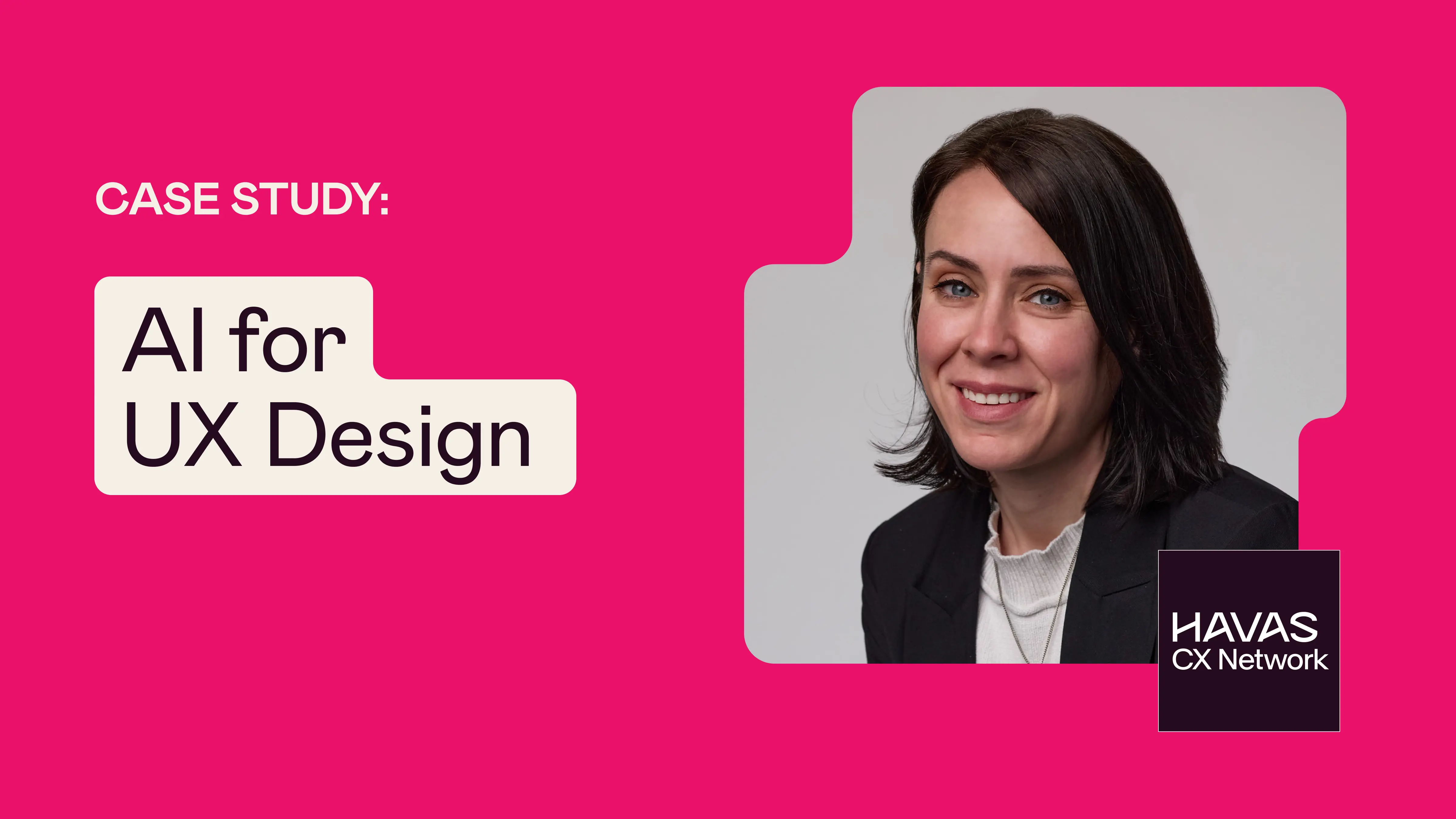


With nearly 20 years experience working in design, Creative Director Sarah Nelson-Balonis has built a career that spans visual design, UI, and UX. At Havas CX, she leads a New York–based design team while frequently stepping into cross-disciplinary UX work.
As AI increasingly reshapes design workflows, Sarah realized that she needed to dive into the new capabilities AI offers designers. “I knew I needed to get up to speed so I could lead my team responsibly.” She wanted clarity, confidence, and a structured way to understand how AI fits into modern design practices.
That led her to enroll in Designlab’s AI for UX Design course—an experience that helped her move past hesitation and toward a deeper, more grounded understanding of how AI can support both her own work and her team’s growth.
I definitely felt out of my depth at first, but the [course] framework helped me…understand the full process.
A Structured Roadmap for Learning AI—Without the Overwhelm
Sarah entered the course with a few goals in mind:
- Get comfortable with AI: Build confidence with the tools, reduce uncertainty, and understand how to use AI responsibly in day-to-day design work.
- Develop practical, teachable skills: Gain hands-on experience she could bring back to her team, especially in UX areas she never received formal training in.
- Expand beyond visual design: Grow into a more T-shaped designer, balancing her visual strengths with deeper UX process knowledge.
- Strengthen research and usability practices: Use AI to refine personas, run faster testing cycles, and push past personal or team biases.
- Stay relevant and future-ready: Keep pace with industry changes while helping her designers grow their own skills and career trajectories.
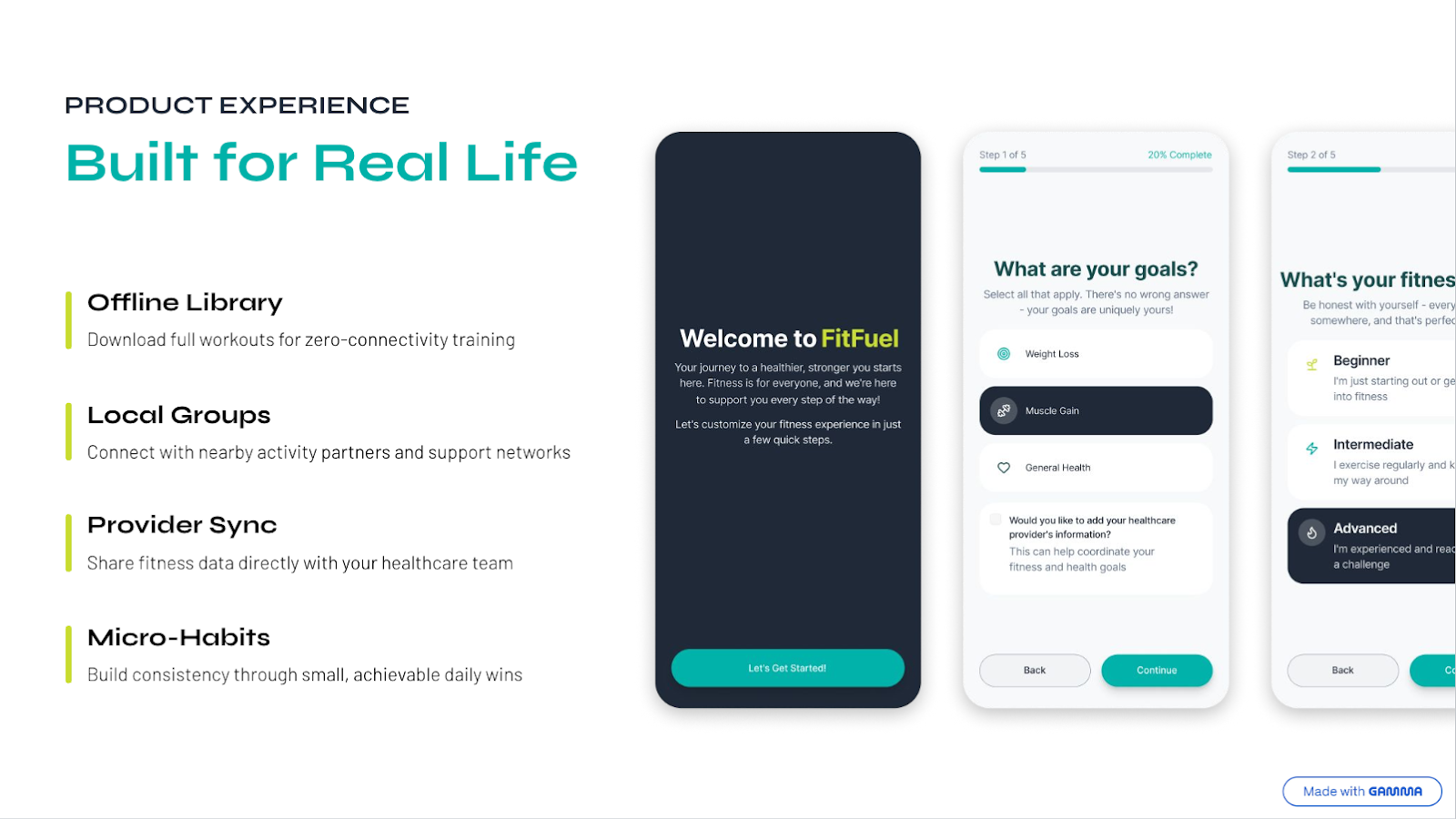
The course’s structure—moving from research to concepting to high-fidelity design to storytelling—gave her a clear sense of progression. “I definitely felt out of my depth at first,” she says, “but the framework helped me catch up and understand the full process.”
One of her early takeaways was how AI could open up new ways of thinking. The tools helped her step outside her own patterns, explore alternatives more quickly, and break through the creative stagnation that can happen when starting from a blank slate. For Sarah, this immediately connected to her team’s growth.
“I have designers who struggle when they’re given total freedom,” she explains. “AI helps them get unstuck and explore new directions.”
Learning Through Real Demos and Real Context
Each week opened with a live lecture led by course creator Chrissy Welsh, whose real-time demos broke down tools and troubleshooting moment by moment. For Sarah, these sessions were a highlight.
“The lectures were great,” she says. “They were clearly live—not prerecorded—and I could go back and cross-reference everything with the slides and recordings. It made the learning feel one-to-one.”
Peer sessions added another layer. Led by mentor Matthew Schneider, the weekly meetings offered open discussion, flexibility, and the chance to explore real work examples. Even when Sarah mostly listened, she found them invaluable.
“It wasn’t a rigid agenda,” she recalls. “If we needed to spend more time on a topic, we stayed there. It felt like everyone’s needs were actually being addressed.”
Building Confidence and Looking Ahead
For Sarah, one of the most meaningful outcomes of the course was a shift in mindset—from discomfort and hesitation toward clarity. “It made me feel like I’m not disposable as a designer,” she says. She found it reassuring to see firsthand how much human oversight AI truly requires. The course reinforced a critical point: AI isn’t replacing designers—it’s amplifying the need for strong ones.
AI isn’t replacing what we do. It’s helping us think faster, explore more, and push our work further.
While Havas CX continues expanding company-wide access to AI tools, Sarah is eager to bring what she’s learned deeper into team workflows—from concepting to usability testing to process refinement. With a stronger understanding of AI’s capabilities and limitations, she feels better prepared to support her team, advocate for responsible use, and guide creative decisions with more confidence than before.
“AI isn’t replacing what we do,” she says. “It’s helping us think faster, explore more, and push our work further—when it’s used responsibly.”
Interested in increasing your own proficiency with AI tools and workflows? In addition to the AI course for UX and product designers described in this case study, Designlab also offers an AI prototyping course and a new program for learning how to Vibe Code. We encourage you to check them out.


.webp)