📰 3 THINGS TO CHECK OUT
Is Density the New Minimalism?
- UX strategist Noah Davis argues that as design taste moves beyond extreme minimalism, tools like Figma, Notion, and Linear prove dense interfaces can still feel clear when hierarchy, grouping, and structure do the heavy lifting.
- Over-simplified UIs often opt for visual calm above all else, hiding functionality behind icons, menus, and empty space. But Davis points out that density isn’t the problem—un-curated density is.
- “Interfaces must carry more responsibility now: they’re dashboards for data, creativity, communication, and AI co-pilots. The challenge isn’t to make them ‘simple.’ The challenge is to make them legible.”
- Designer and author Justin Dauer argues that in an AI-saturated world, calling design work “good” no longer means as much. When polish and high fidelity are cheap and easy to generate, subjective shorthand like good or bad obscures rigor and weakens designers’ ability to explain their decisions.
- Instead, Dauer makes the case for judging design by alignment to goals, not taste. Clear, objective language grounded in research, constraints, and outcomes helps teams critique work constructively, avoid false certainty, and collaborate without ego.
- “Design isn’t ‘good’ or ‘bad.’ Design is aligned — or misaligned — to goals. The more accurate framing is whether the work is successful or unsuccessful relative to those goals.”
The Skill That Gets Designers Hired
- UX writer Caitlin Snethlage argues that in today’s crowded, AI-accelerated job market, strong skills and a polished portfolio aren’t enough—what actually sets candidates apart is how clearly and confidently they communicate their value in interviews and conversations.
- She reframes presentation skills as a core career skill, showing how structure, storytelling, and reading the room turn interviews from interrogations into collaborative discussions.
- “When AI can do most of the technical work, the person who can walk into a room and make people feel something is more likely to get noticed—and hired.”
💜 PORTFOLIO INSPIRATION
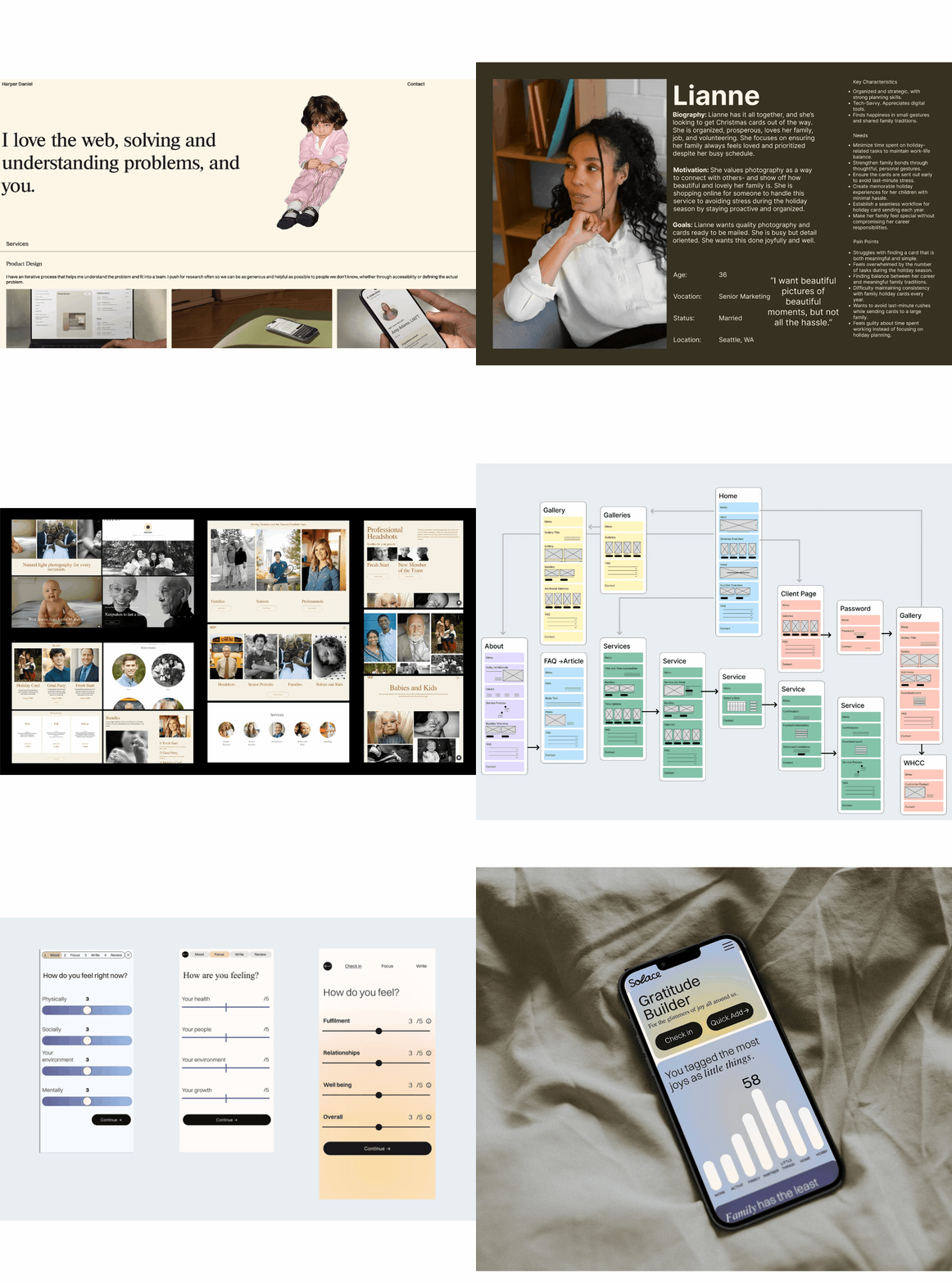
Harper Daniel brings a deep respect for design as both a technical and human medium to her work. Across projects, Harper consistently pairs thoughtful research with practical execution, pushing for accessibility, clarity, and generosity without losing sight of real constraints. In MDP, she rethinks the standard photographer portfolio by borrowing patterns from e-commerce, making services easier to browse, compare, and book. The result balances professionalism with approachability, showing how trust is built through transparent pricing, representative imagery, and careful information hierarchy. Her project Solace brings that same care to a gratitude-focused mental health app, where tone and reflection are prioritized in the design decisions. Within Harper’s work is a clear philosophy: design should be rigorous, accessible, and emotionally aware—but also exciting.
Got a portfolio you love that you’d like to share with our audience? Email your suggestions to hello@designlab.com.
💡 INTERESTING STUFF...
- Product Jobs Continue to Grow in 2026
- Meet LEGO’s Smart Brick
- Why Introverts Make Great Presenters
- Designing for 2026: Less Flash, More Thought
Pay attention to what users do, not what they say. — Jakob Nielsen, usability expert
🧪 FROM THE LAB
Our Winter Sale is Live
Now through February 1st, we’re offering $150 off UX Academy Foundations as well as $150 off all 4-6 week courses. Whether you're looking to transition into a career in design or are already an experienced design pro, we have programs for you. These discounts end Sunday, 2/1 at 11:59pm PT, so don’t wait!
Apply Now for UI Mastery Certification
Applications are now open for the next cohort of UI Mastery Certification, launching this April. Built for experienced designers, this 8-week, studio-style program focuses on advanced UI systems, visual hierarchy, and decision-making that will help you sharpen your edge as a designer. Apply now.


.webp)

.png)