📰 3 THINGS TO CHECK OUT
- In this article, Roger Wong argues that product design is shifting away from artifact production and handoffs and toward judgment, orchestration, and deciding what’s worth building as AI increasingly handles execution across design, code, and research.
- That argument feels especially timely in light of Figma’s recent announcement about code-and-canvas workflows, which makes it possible to move AI-generated UI directly into the design canvas. Together, they point to a future where designers spend less time translating intent into pixels and more time directing systems, evaluating quality, and shaping outcomes.
- “The hardest part of design isn’t making things anymore—it’s deciding what should exist at all.”
- Design leaders Martin Tomitsch and Steve Baty examine what they call the “UX butterfly effect”—the idea that even tiny product decisions can ripple outward into major social and environmental consequences.
- To help designers identify those ripple effects, they propose systems-thinking tools like systems maps, impact ripple canvases, and iceberg visuals. Together, these tools shift unintended consequences from unpredictable to foreseeable. “[They] help us to see the relationship between what we do, the choices that we make, and the impacts those have.”
- If you want to better understand how design choices cascade across the entire product experience, you may want to check out our UI Mastery Certification, built for experienced designers who want to deepen their systems thinking and sharpen their judgment. The next cohort launches April 10th, and applications are open.
Big Tech is Using Design Philosophy as a Smokescreen
- Design and technology journalist Rima Sabina Aouf argues that the language of “calm technology” is being used to repackage products, while still relying on attention capture and data monetization. For UX designers, it’s a reminder that minimalism doesn’t automatically equal ethical products and practices.
- Aouf asserts that designers must think beyond seamlessness and convenience to consider data flows, consent, and long-term system impacts. For product teams, this reinforces that privacy architecture and on-device processing are design decisions—not just engineering afterthoughts.
- “These companies aren't aiming to free us from our digital dependencies; they just want to own the next system we depend on. It's time to stop letting them control the narrative…the actions of individuals, industry groups and governments matter right now more than ever.”
💜 PORTFOLIO INSPIRATION
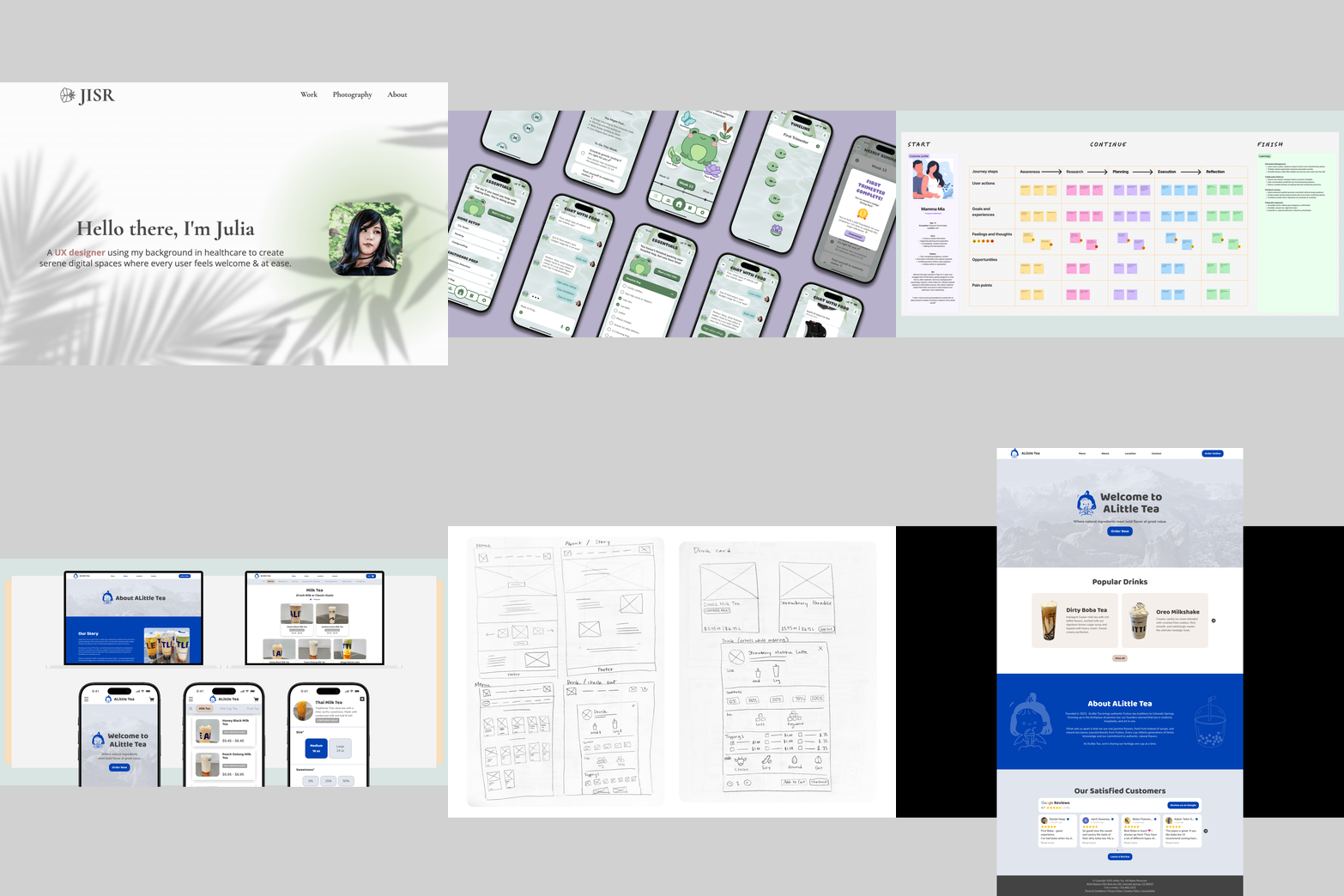
UX Academy graduate Julia Rodriguez brings an empathetic, research-driven lens to product design shaped by her background in healthcare. In her capstone project Preggy Prog, she designed a warm, collaborative pregnancy planning app that transforms information overload into a guided, partner-inclusive journey—pairing week-by-week milestones with an AI-powered recommendation tool. In ALittle Tea Co., she partnered directly with a local business owner to redesign a responsive website that highlights authentic family storytelling, improves dietary transparency, and aligns digital branding with the in-store experience. Across her projects, Julia demonstrates a thoughtful balance of user empathy, structured research, and polished visual execution—designing not just interfaces, but experiences built on trust.
Got a portfolio you love that you’d like to share with our audience? Email your suggestions to hello@designlab.com.
💡 INTERESTING STUFF...
- Is Social Media Over for Creatives?
- Framer vs. Wordpress vs. Webflow: Who Wins?
- Good Design is Obvious. Good Build Quality Isn't.
- The New Stack of UX Survival Skills
The only important thing about design is how it relates to people. — Victor Papanek, designer and professor
🧪 FROM THE LAB
Vibe Coding Camp Starts Tuesday
The first cohort of Vibe Coding Camp launches in just four days, but there’s still time to sign up.
Over four weeks, you’ll learn modern, AI-powered workflows for turning ideas into real, deployed web apps—using tools like Cursor, Vercel, Supabase, and Figma. This isn’t about becoming a traditional engineer; it’s about learning how products actually get built now.
If you want to move beyond static mockups and confidently ship working products—whether you’re a designer, PM, or founder—this is your moment to jump in. Enroll now.
Data-Driven Design Launches in One Week
The next cohort of Data-Driven Design kicks off Friday, February 27th. This 6-week course is built for designers who want to level up their ability to integrate data into their design practice and strengthen their strategic impact. You’ll learn how to connect design choices to business outcomes, and present your work in a way that wins stakeholder buy-in.
Join our live informational webinar on Tuesday, February 24th at 1pm ET or enroll now.


.webp)

.png)