





When we first reviewed AI logo generators in early 2024, the category made sense. General-purpose AI image models like DALL-E and Midjourney were impressive, but they had one major limitation for logo work: they couldn't render text reliably. Letters often came out garbled, mirrored, or entirely made up. So if you wanted an AI-generated logo with your business name actually spelled correctly, you typically had to use a dedicated logo generator — a tool like Looka, Brandmark, or Tailor Brands, which combined template libraries with automation to assemble something usable.
That landscape has changed quickly.
In 2026, the leading image models — GPT Image, Ideogram, Google's Nano Banana, and Recraft — render typography accurately and reliably. They handle short marks, full wordmarks, and stylized lettering with the kind of consistency that once required a designer working in Illustrator. Recraft can even output real, scalable SVGs. The text-rendering advantage that once set dedicated logo generators apart has largely disappeared, and the difference between what traditional logo tools produce and what newer image models can create is becoming increasingly noticeable.
So we did the obvious thing: we revisited our top picks from the 2024 article and compared them head-to-head with the latest generation of AI image models. Here’s what stood out.
The short version
- The older AI logo generators (Looka, Brandmark, Tailor Brands, Logo.com) still work, but the results now tend to feel more templated than they did a few years ago. They’re still useful if you need something quick and straightforward — especially without a design background — but they can feel more limited creatively compared to newer tools.
- The newer alternative is using an AI image generator directly. GPT Image, Ideogram, Nano Banana, and Recraft can produce logos that feel more distinctive, flexible, and visually refined — and you no longer have to wrestle with getting your business name rendered correctly.
- There is one important caveat: image generators typically create an image of a logo, not a production-ready logo system. Unless you're using Recraft (which outputs SVGs), you'll usually want to bring the result into a vector tool to refine details, create variations, and export usable file formats. We’ll walk through that process later in the article.
- Recraft V4 is currently the closest thing to a full replacement for dedicated AI logo generators — it outputs real SVGs, supports brand kits, and is designed specifically for creative workflows. If we had to recommend a single tool to start with, this would probably be it.
What's in this article
- Part 1: We re-tested 4 of the most popular AI logo generators from our 2024 roundup
- Part 2: The 4 AI image models that have effectively replaced them
- Part 3: The tradeoffs of image-model logos (and the extra steps you may still need)
- Part 4: Which approach is right for you
Part 1: Re-testing the old guard
We revisited the four tools from our 2024 roundup that generated the most reader interest, creating a “Coffee Corner” logo with each using the same hypothetical coffee shop concept and roughly the same style of prompts we used in our original testing. The goal was to see whether these platforms had meaningfully evolved over the past two years — or whether the landscape around them had simply changed.
The short version: the tools themselves haven’t necessarily gotten worse. But the broader world of AI-generated design has advanced dramatically around them.
1. Looka
How to find it: looka.com
Cost: Free to design; downloads start around $20, brand kit packages run up to $80 or more.
Our 2024 take: Strong customization and an intuitive interface, but designs felt a bit generic and lacked a unique spark.
How Looka works in 2026: Looka’s overall experience feels largely unchanged. You enter your company name, choose a few colors to establish the overall aesthetic, browse templates (some of which feel familiar from a few years ago), and either let Looka suggest symbols or select them yourself.
The results are perfectly usable, but they also reinforce the broader issue we mentioned earlier: the output tends to feel heavily templated. While you have control over elements like color palette, iconography, and layout, there’s still a noticeable ceiling when it comes to originality and creative depth.
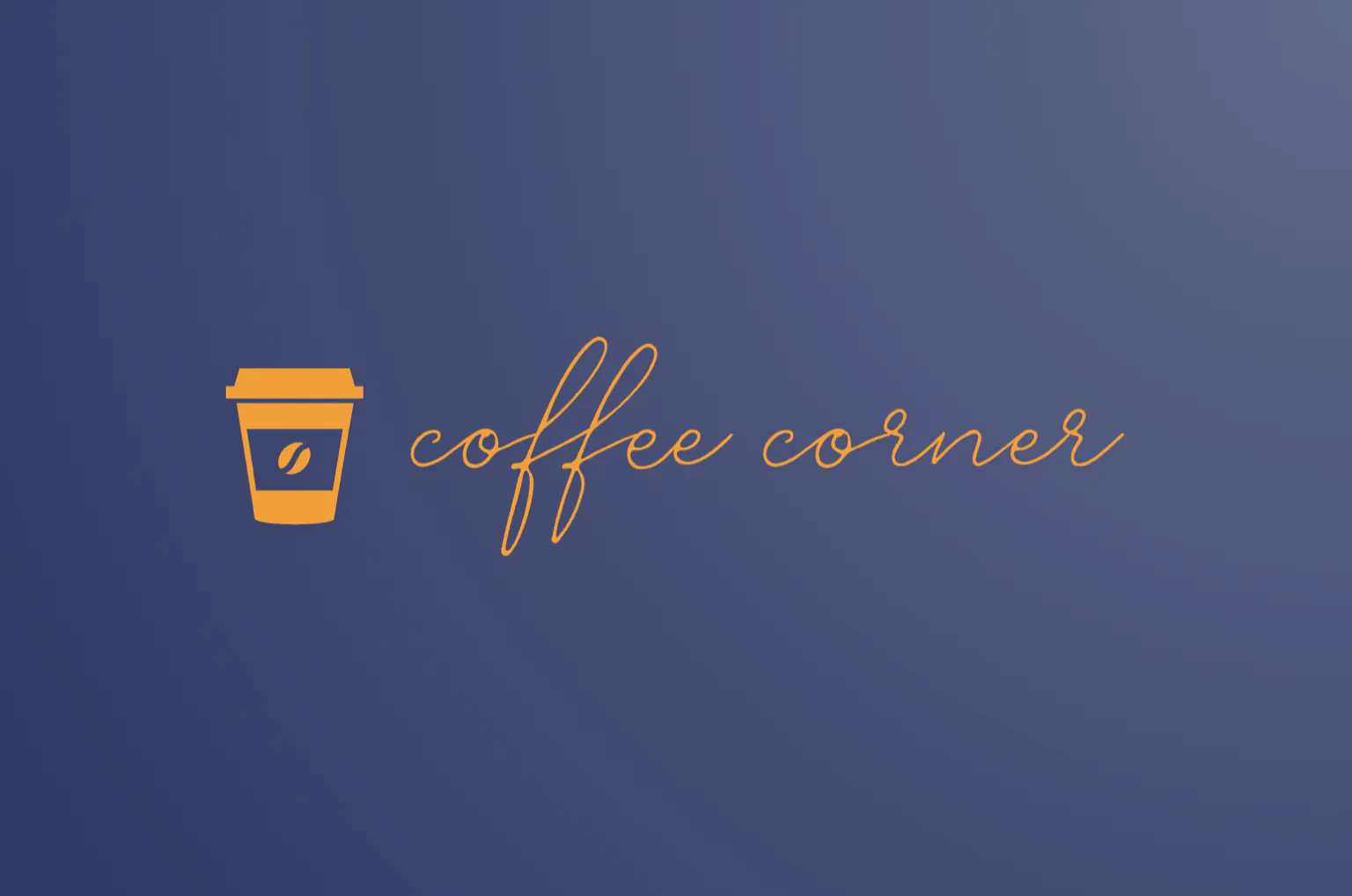
Where Looka still earns a place — and where it doesn't: Looka is still a solid option for someone with little to no design experience who needs to generate ideas quickly. It works well for low-stakes projects, student work, or quickly exploring a basic brand direction, and makes it easy to experiment with colors, symbols, and layouts without needing design software expertise. That said, compared to newer AI image-generation tools like Recraft or Ideogram, the results can feel noticeably more templated and dated, with less originality and creative flexibility.
Verdict: Great for fast, beginner-friendly logo ideation — but increasingly outclassed for brands that want something more distinctive.
2. Brandmark
How to find it: brandmark.io
Cost: One-time logo from $25, enterprise plan up to $175 with extra file types and design team access.
Our 2024 take: Good UX and helpful guidelines, but the editing controls felt flat and more advanced features sat behind a paywall.
How Brandmark works in 2026: Brandmark’s interface is still straightforward and easy to use, especially for beginners. While it took a few rounds to generate results that felt compelling (some of the preset “color profiles” felt surprisingly narrow — choosing “organic,” for example, mostly produced variations of brown palettes), the platform ultimately offered a decent amount of variety. It also gives users more flexibility to customize and refine designs afterward than some of the more rigid template-based logo generators.
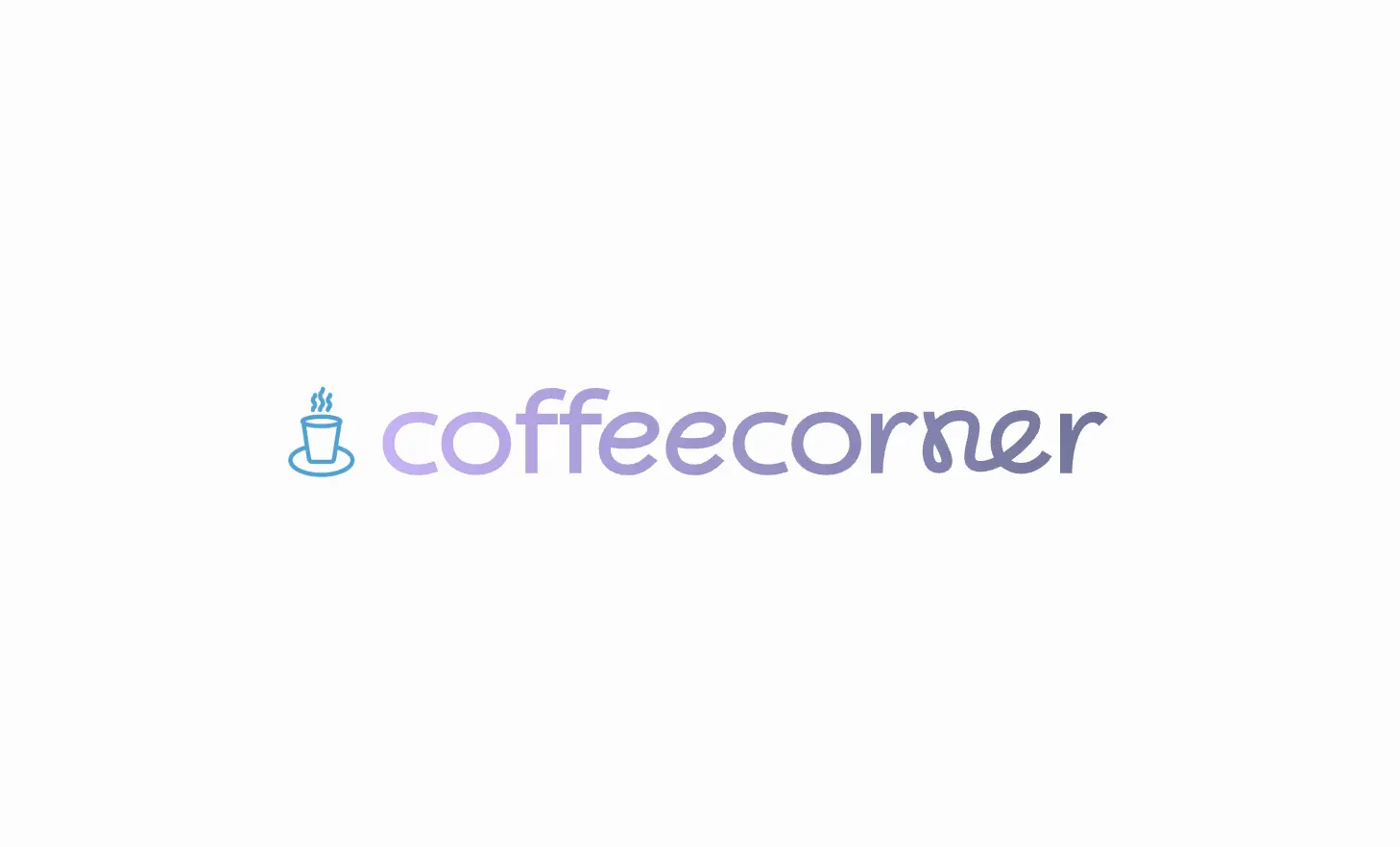
Where Brandmark still earns a place — and where it doesn't: Brandmark is still a solid choice for someone with little to no design experience who wants a wider range of logo directions without needing to learn prompting or design software. Compared to some older logo generators, it offers more room for customization and iteration, which helps the process feel a bit less constrained. That said, the final output still tends to feel less distinctive, creative, and visually polished than logos generated with newer AI image tools.
Verdict: More flexible than some traditional AI logo generators — but still not as creatively powerful as modern image-generation models.
3. Tailor Brands
How to find it:: Go to www.tailorbrands.com/logo-maker
Cost: Free low-res download; subscription from approximately $10/month for high-res and broader branding tools.
Our 2024 take: Disappointing — confusing UI for non-designers, generic outputs, and not much guidance for someone learning.
How Tailor Brands works in 2026: Tailor Brands’ interface feels easier to navigate than it did in 2024. The workflow moves users cleanly through font selections, iconography, and visual themes to help shape a broader brand identity. That said, the actual logo output hasn’t evolved much — in one case, a suggested design looked nearly identical to what the platform generated two years ago. While the experience itself feels more polished, the end results still come across as heavily templated and, at times, a little underwhelming creatively.
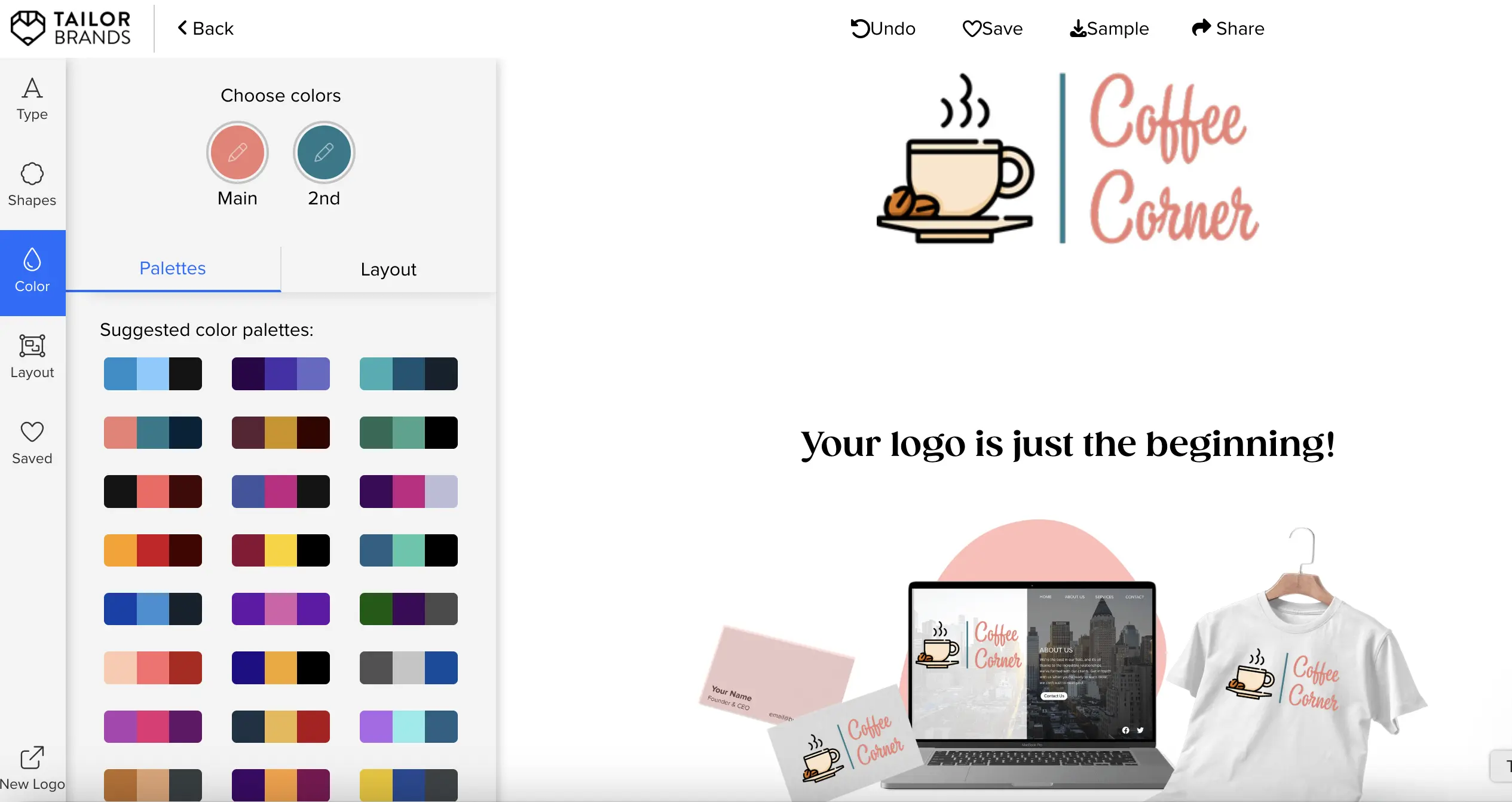
Where Tailor Brands still earns a place — and where it doesn't: Tailor Brands is still useful for someone with little to no design experience who wants an all-in-one branding package without needing to learn prompting or design tools. The platform does a good job presenting logos in context with mockups like business cards, apparel, and branded assets, and its post-generation editor offers a fair amount of control over fonts, colors, and iconography. But despite looking more robust on the surface, the actual logo concepts often feel safe and formulaic compared to what newer AI image-generation tools can produce. It works best for quick ideas or simple branding needs, rather than creating something especially distinctive or creatively ambitious.
Verdict: A polished beginner-friendly branding tool with useful customization features — but one that still struggles to produce logos that feel truly modern or original.
4. Logo.com
How to find it: logo.com
Cost: One free logo download; additional files from around $8; full branding kits cost more.
Our 2024 take: Fast and easy with lots of starting directions, but the icons are pulled from a library rather than generated, and results felt generic.
How Logo.com works in 2026: Logo.com was one of the stronger surprises in this round of testing. The platform is definitely still template-driven, but it offers a wide range of options right from the start, and the inputs you provide — business type, color palette, iconography, and overall style — feel meaningfully reflected in the results. While the outputs are still structured within a template system, they generally feel more polished and visually varied than many of the older competitors in the category.
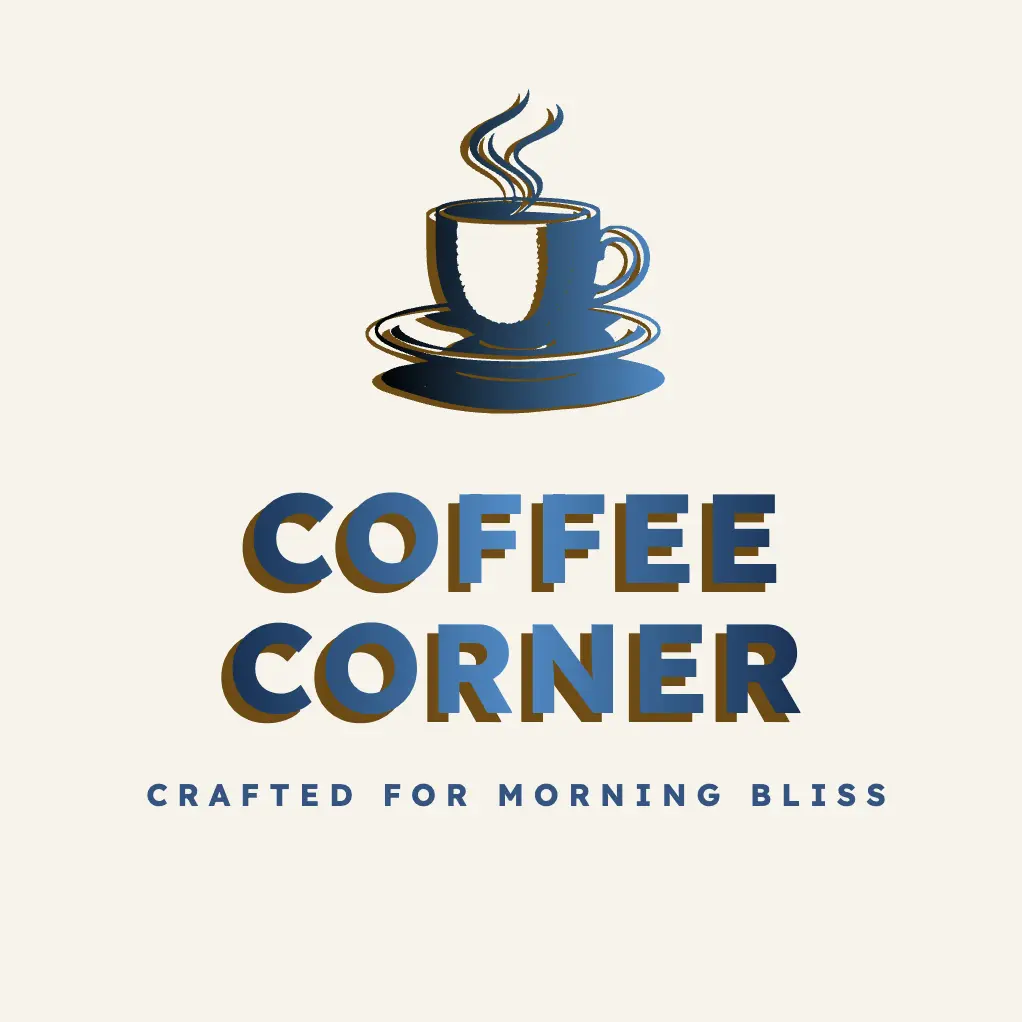
Where Logo.com still earns a place — and where it doesn't: Logo.com feels best suited for someone with at least a bit of design confidence who wants something fast, flexible, and visually polished without diving fully into AI prompting workflows. The customization tools are strong enough to make meaningful adjustments to layouts, colors, and visual elements, especially if you’re already comfortable using creative software or thinking through branding decisions. Compared to some of the other traditional AI logo generators, the outputs feel more creative and adaptable, even if they still stop short of the originality you can get from newer AI image-generation models.
Verdict: The strongest of the traditional AI logo generators we tested — especially for users who want speed, customization, and more polished creative direction without relying entirely on prompt-based tools.
Verdict on the Old Guard
If you read our 2024 article, the biggest takeaway is this: the tools themselves haven’t necessarily gotten worse — but expectations for what makes a strong AI-generated logo have changed dramatically. Two years ago, outputs from tools like Looka or Brandmark felt genuinely impressive for fast, affordable, AI-assisted branding. Today, those same results feel much more obviously template-driven, with limited originality beneath the surface.
That doesn’t make these tools irrelevant. For someone with little design experience who needs a logo quickly and isn’t planning to spend time iterating, they can still produce something clean, functional, and usable. But in many ways, these platforms still operate within the same creative boundaries they did a few years ago, while newer AI image-generation tools have expanded what’s possible. In 2026, the standard for AI-generated branding has evolved — and most traditional logo generators haven’t evolved at the same pace.
Part 2: The new wave — AI image models that have largely replaced dedicated logo tools
Two years ago, recommending an AI image generator for logo design would have been difficult to justify. Text rendering was unreliable, prompt adherence was inconsistent, and most outputs were low-resolution raster images that weren’t especially practical for real-world brand use.
That’s changed quickly. Today’s leading image models can render short typography accurately, follow detailed creative direction, and — in some cases, like Recraft — even generate true vector output.
To keep our testing consistent, we gave each AI image model the same prompt: “Create a warm, modern logo for a neighborhood coffee shop called ‘Coffee Corner.’ The design should feel welcoming, cozy, and slightly upscale while still approachable. Use clean typography with smooth, rounded letterforms and incorporate a subtle coffee-related icon, such as a steaming cup, coffee bean, or corner-inspired shape integrated into the logo.” We then evaluated how each tool interpreted the creative direction, typography, iconography, and overall brand feel.
The result is that many of the most compelling AI-generated logos in 2026 aren’t coming from dedicated logo generators at all. They’re coming from broader creative AI tools that happen to be exceptionally capable at logo and identity design.
Here are four of the strongest options we’d recommend exploring first.
1. Recraft for logos
How to find it: recraft.ai
Cost: Free tier with limited credits; paid plans start around $12/month for individuals, with higher tiers for teams.
Recraft is the closest thing to a true replacement for the dedicated logo generators — and arguably the most important tool in this article. It's the only major AI image model that outputs real, scalable SVG vector files, which means the result is something you can actually use as a logo at any size without quality loss. V4 added native brand kit support, so you can upload your color palette and style references and have the model apply them consistently across generations. It's purpose-built for design work in a way the others aren't.
Pros:
- True SVG output. The only model on this list that produces real vector files — critical for actual logo use.
- Brand kits and style consistency. Upload your palette and style references, and the model respects them across generations.
- Designer-friendly UI. A style selector lets you choose vector illustration, flat design, realistic, and more without prompt gymnastics.
- Solid text rendering. Not quite at Ideogram's level for text-heavy compositions, but very good for the short typography typical of logos.
Cons:
- Learning curve for prompts. Getting the best results means writing design-oriented prompts, not just descriptive ones.
- Less generous free tier. You'll bump into credit limits faster than on Google or ChatGPT's tiers.
- Not the best for photorealistic work. If you ever want a non-logo image of, say, a coffee cup on a real table, you'll reach for something else.
How it worked for us:
Recraft was impressive, and the difference in the results was immediately noticeable. Compared to the dedicated logo generators, the outputs felt more creative, expressive, and less obviously templated. Recraft also generated multiple concepts that felt genuinely distinct from one another while still staying closely aligned with the overall prompt and brand direction.
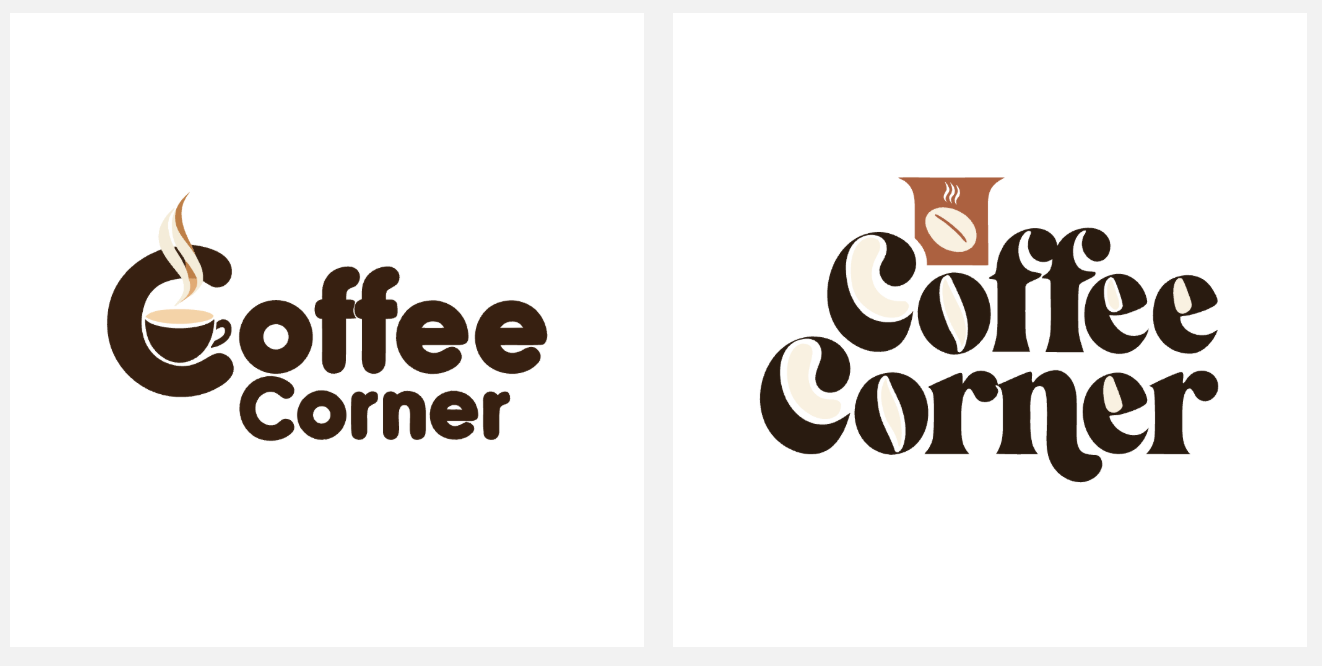
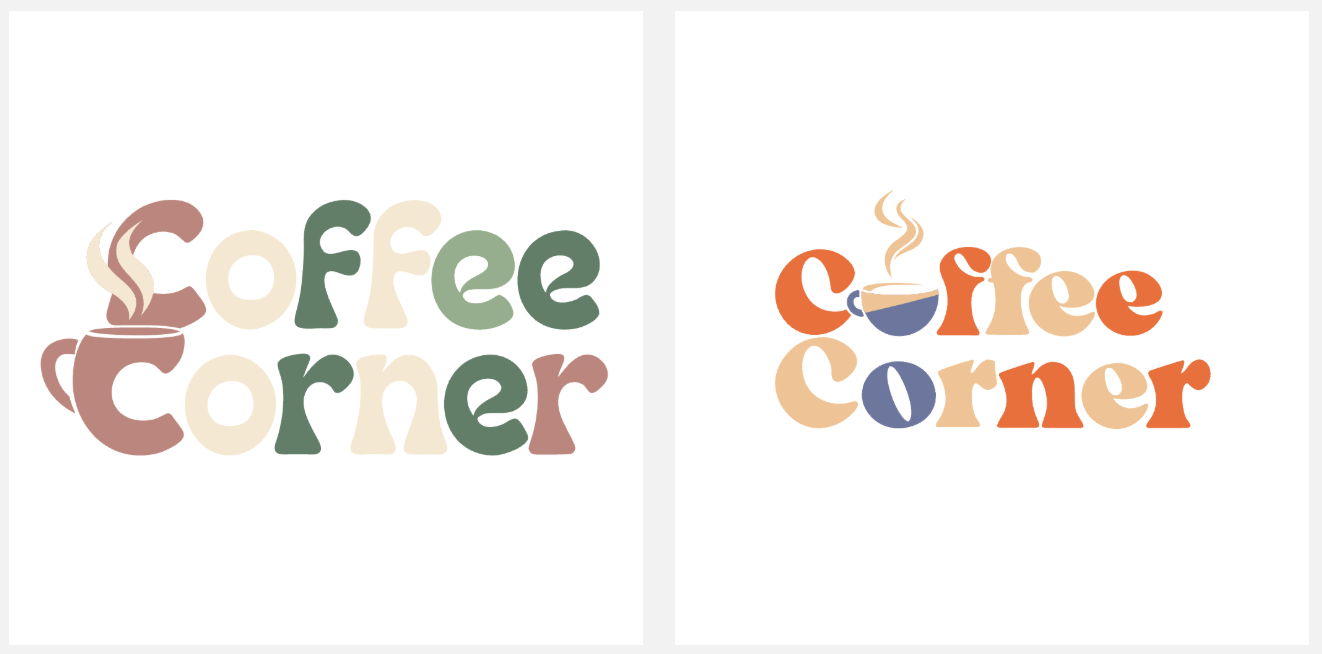
We then asked the model to iterate on the original of the first logo, keeping the same overall aesthetic while making the logos more playful and incorporating pastel colors. The follow-up results were especially strong, and the iteration process felt natural and flexible. Overall, the tool was intuitive to use, and many of the generated logos already felt workable with minimal refinement. That said, users with little prompting experience may find the iteration process more challenging to navigate on their own. For designers, creatives, or anyone already comfortable working with AI tools, though, Recraft is an especially powerful option for brainstorming and developing logo concepts quickly.
2. Ideogram for logos
How to find it: ideogram.ai
Cost: Free plan (10 credits/week, slower queue); paid plans from $8/month.
Ideogram built its identity around solving the problem that plagued image AI for years — text that looks like text. In 2026 it remains the best model for typography-led marks, quote graphics, and any logo where the wordmark is the main event. If your business has a name that's tricky to render (an uncommon spelling, a long word, or unusual punctuation), this is the model that'll get it right on the first or second try.
Pros:
- Best-in-class text rendering. Multi-word phrases, brand slogans, and product-label-style typography come out crisp and correctly spelled.
- Strong typographic creativity. Particularly good at stylized lettering, vintage signage, and decorative type — the kinds of things that used to require a hand-letterer.
- Free tier is usable. 10 credits a week is enough to actually try the tool on a real project.
- Genuinely good overall image quality, not just "good at text." The lighting and composition got a significant upgrade recently.
Cons:
- Raster output only. You'll get a high-res PNG, not an SVG — so you'll need to vectorize it for real logo use.
- Slower free queue. Generations on the free plan can take a few minutes; the paid tier is much faster.
- Less photorealistic than Nano Banana or Midjourney if you want non-logo imagery.
How it worked for us:
Ideogram generated a strong range of logo concepts on the first pass using our original prompt. While some of the outputs felt slightly less refined or creatively distinctive than what we saw from Recraft, the overall quality was still impressive — and some of that ultimately comes down to personal preference and aesthetic direction. The interface itself is especially approachable and easy to navigate, and the dedicated “Logo” option in the top navigation helps the experience feel more tailored and intuitive from the start.
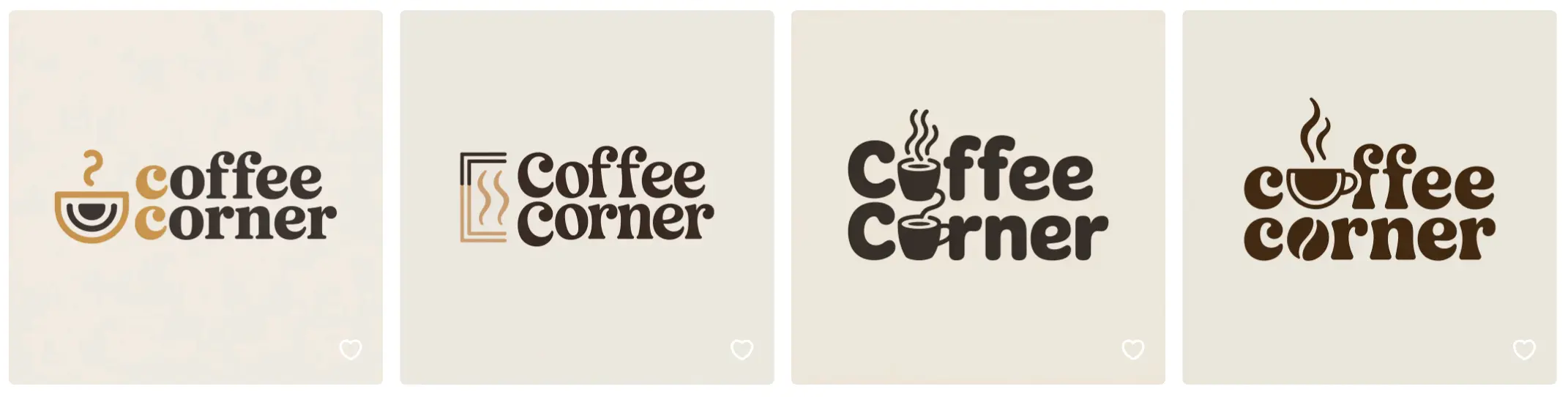
We then gave Ideogram the same follow-up direction we used with Recraft: adjusting the logos to incorporate pastel tones and generating a few more playful variations. This is where the tool really stood out. Ideogram handled iteration extremely well, accurately following detailed instructions and producing a mix of subtle refinements and more dramatic creative changes exactly as requested. The workflow felt seamless, flexible, and beginner-friendly throughout.
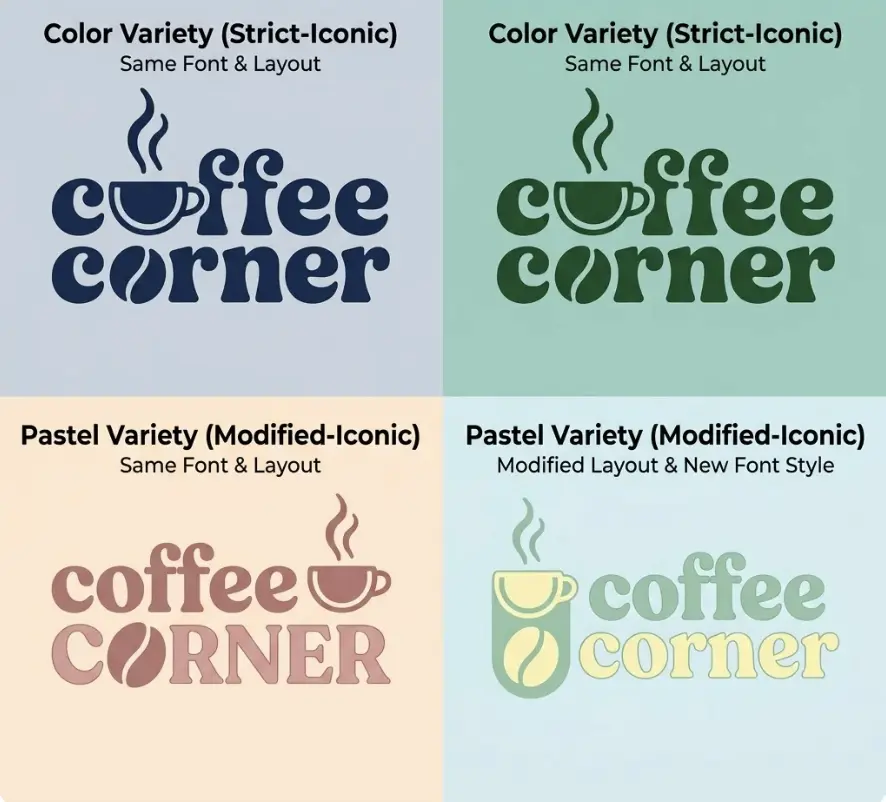
Overall, Ideogram strikes a strong balance between accessibility and output quality. It’s approachable enough for users who are new to AI tools or design workflows, while still producing polished, compelling results that make it genuinely useful for more experienced designers and creative professionals.
3. GPT Image (via ChatGPT) for logos
How to find it: chatgpt.com
Cost: Included with ChatGPT Plus at $20/month, which also gives you the rest of ChatGPT's features.
GPT Image is the most accessible entry point for non-designers. The interface is a conversation: describe what you want, answer a few clarifying questions, and iterate from the result. Prompt adherence is excellent — if you ask for a specific composition, color, or style, you get it more reliably than from most competitors. Text rendering is strong (not quite Ideogram-level, but good for short marks), and the model handles complex prompts with multiple elements gracefully.
Pros:
- Conversational iteration. Easy to refine via chat: "make the icon smaller," "try a serif font," "keep the colors but change the layout."
- Excellent prompt adherence. Says what you mean and gets back what you asked for.
- Comes with ChatGPT Plus, so for many readers there's no incremental cost.
- Good text rendering, especially on short marks (1–5 words).
Cons:
- Raster only. Same vectorization step required as with Ideogram.
- Slower than diffusion-based competitors. GPT Image uses autoregression, which means one image per generation and a longer wait.
- Less designer-oriented than Recraft — there's no built-in concept of brand kits or style presets, so you'll do more prompt work to maintain consistency across variants.
How it worked for us:
Of the AI image-generation tools we tested, GPT Image was probably the least successful on the first pass. The initial output wasn’t bad, but it added extra text we hadn’t requested, and the overall composition felt more like a polished illustration than a logo. Compared to the cleaner, more immediately usable results from tools like Recraft or Ideogram, the concepts here generally needed more iteration before feeling brand-ready.
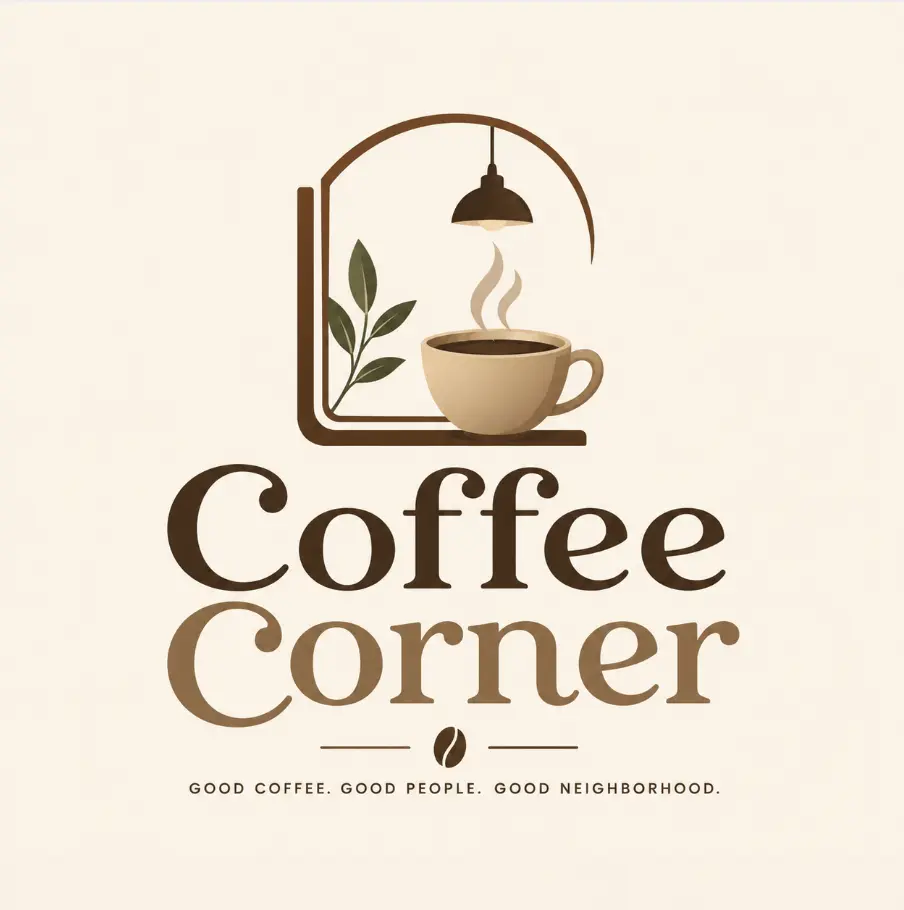
That said, GPT Image’s conversational workflow gives it a different kind of advantage. Instead of relying on more design-focused controls, users can simply describe changes naturally through chat, which makes the experience feel approachable and beginner-friendly. When we asked it to simplify the logo, remove the extra text, and generate an alternate color variation, it handled those revisions well and produced noticeably stronger results in the second round.
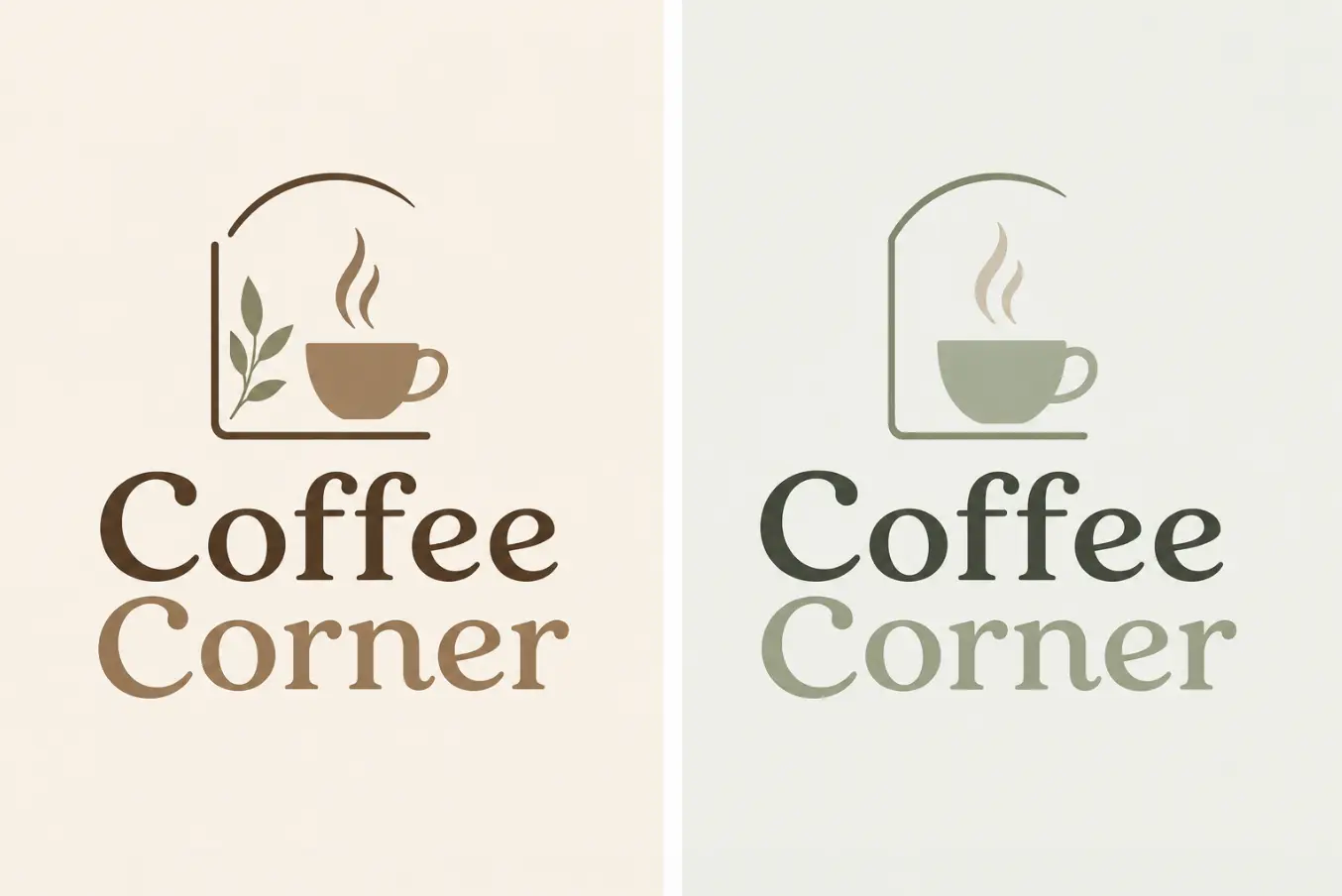
For users who are newer to AI tools or visual design, this conversational approach can feel intuitive and inviting. More experienced designers, however, may find the workflow somewhat limiting compared to platforms with deeper visual controls and more design-specific features. While GPT Image didn’t produce the strongest first-pass concepts in our testing, it still offers an accessible and flexible way to quickly explore logo ideas through natural-language iteration.
4. Nano Banana (Google Gemini) for logos
How to find it: gemini.google.com
Cost: Generous free tier through Gemini; paid Gemini Advanced from $20/month.
Nano Banana, powered by Google’s Gemini image model, is the surprise of the 2026 lineup. It's fast, the free tier is unusually generous, and the text rendering is among the best available. For someone testing the waters on AI-generated logos without committing to a paid tool, this is a strong first stop. Output skews toward clean, modern, slightly polished — which happens to work well for a lot of contemporary brand aesthetics.
Pros:
- Best-in-class free tier. You can do a lot of real exploration without paying.
- Fast generation. Significantly quicker than GPT Image, which matters when you're iterating.
- Strong text rendering. On par with GPT Image for short marks, and the failures it produces tend to be near-misses rather than gibberish.
- Integrates with the rest of Google's ecosystem if you're already living in Docs, Slides, and Drive.
Cons:
- Raster only. Same vectorization caveat.
- Style range is narrower than Midjourney if you want something atmospheric or editorial.
- Less designer-oriented controls than Recraft — no native brand kit feature.
How it worked for us:
Nano Banana felt fairly comparable to GPT Image in terms of the overall output quality and workflow. One thing that stood out immediately, though, was speed — generation times were noticeably faster than the free versions of many competing tools, making it a strong option for users who value quick iteration. Like GPT Image, the first-pass results leaned more toward polished imagery than fully resolved logo design, and the outputs generally felt less refined or sophisticated than what we saw from tools like Recraft.
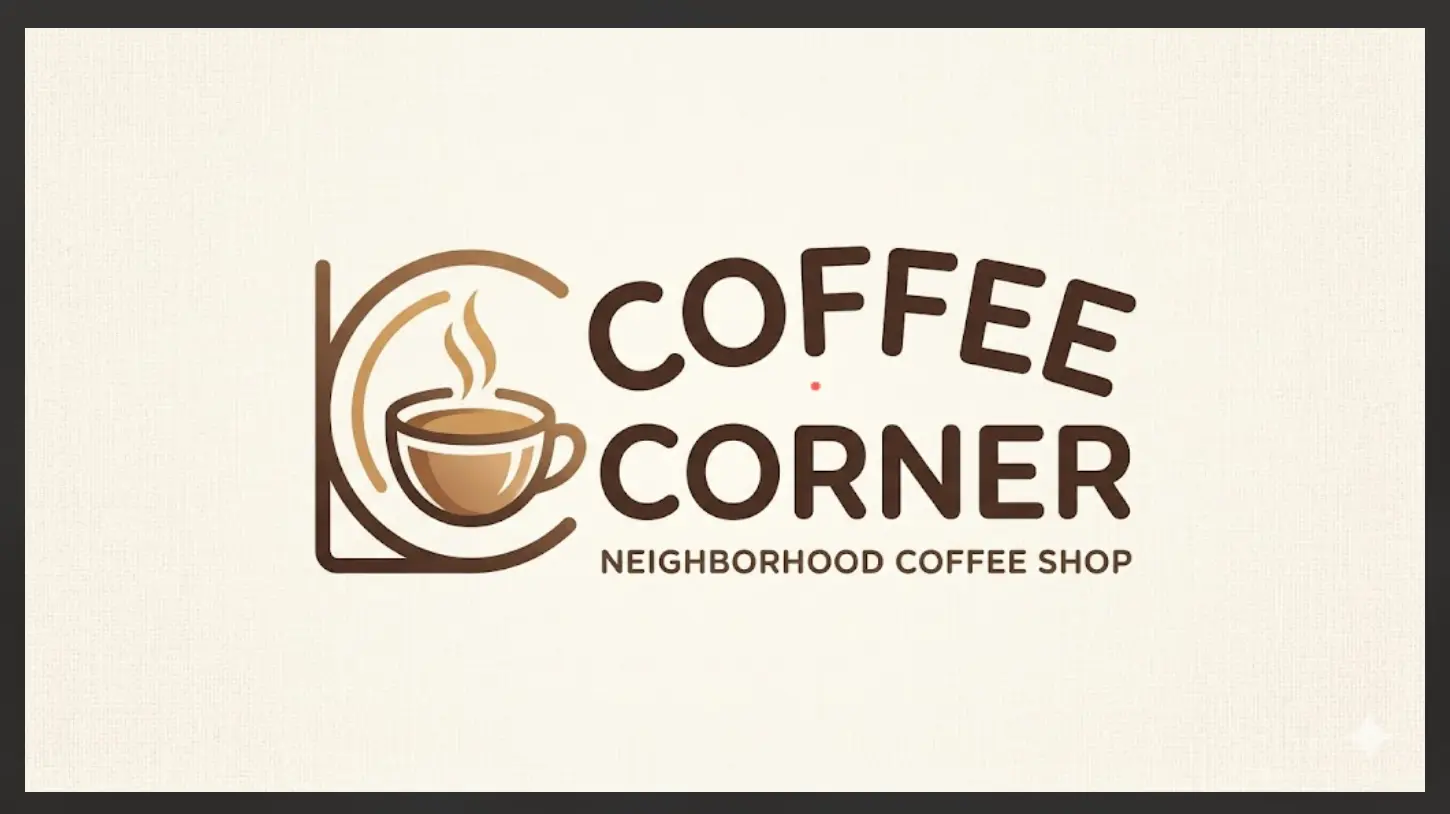
That said, Nano Banana handled revisions well. Once we prompted it to simplify and refine the concepts, the follow-up outputs became much more usable from a logo-design perspective, and the model responded accurately to iterative changes. Overall, the experience feels especially approachable for beginners or anyone looking to explore ideas quickly without a steep learning curve.
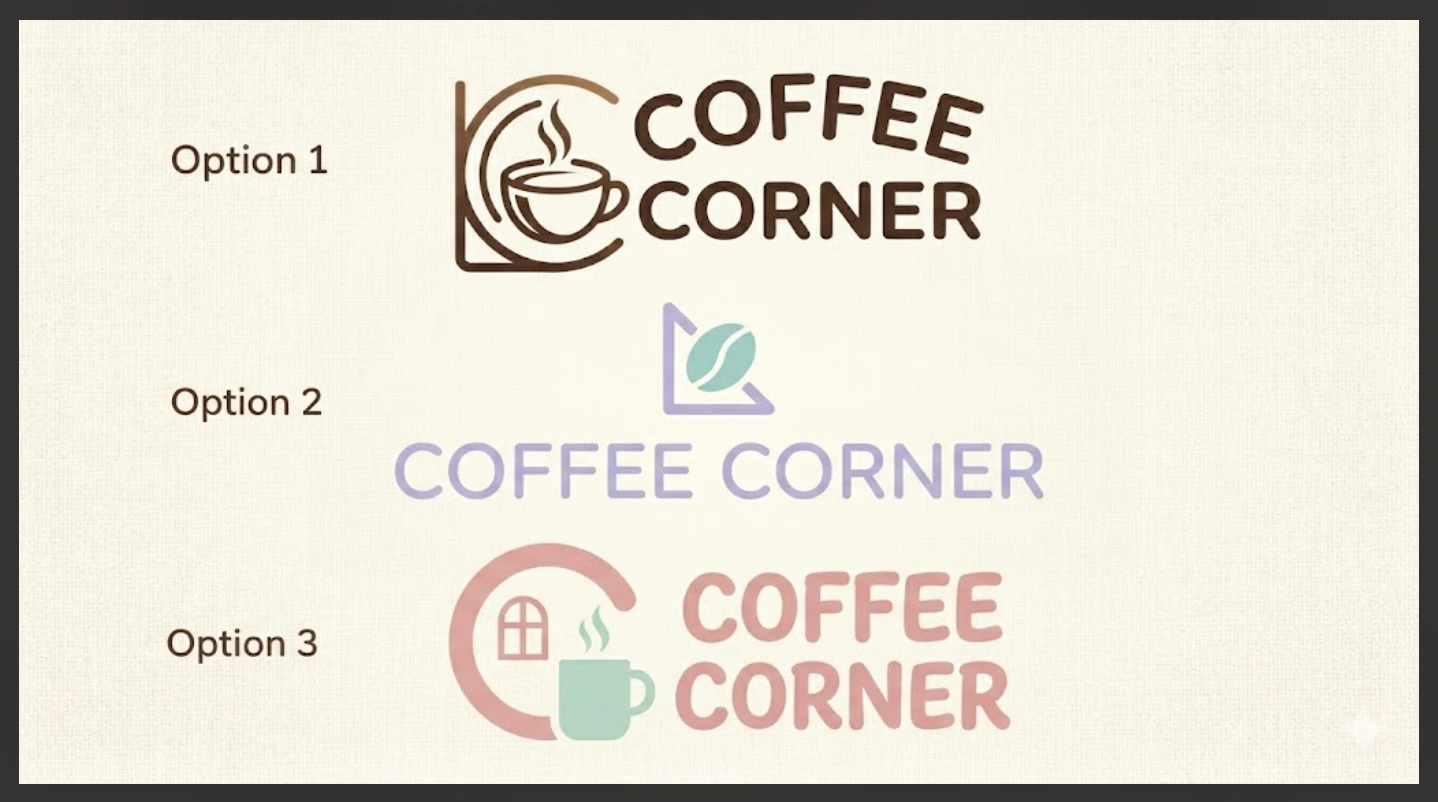
For more experienced designers, however, the tool may feel somewhat limited compared to platforms that offer stronger creative control or more design-focused functionality. While Nano Banana is fast, easy to use, and effective for rapid ideation, it feels better suited to early exploration than producing a fully polished final brand identity entirely within the tool itself.
Honorable mentions
- Midjourney: Still the leader for distinctive, mood-led imagery. Text rendering has improved but lags Ideogram and GPT Image, so for logos it's most useful when you want a striking icon or illustration that you'll pair with separately-set typography. Worth knowing about; not where we'd start for most logo projects.
- Canva: We flagged Canva in our 2024 article as "not really AI." That's changed. Canva has integrated AI logo generation that's genuinely competent for non-designers, and the killer feature is that it's also where most non-designers already build the rest of their brand assets — business cards, social templates, decks. If your priority is a fast end-to-end branding workflow rather than the single best logo, Canva is a legitimate option in 2026.
Part 3: The catch with image-model logos
Here's where we have to be honest about a real tradeoff. The new image models produce better-looking logos than the dedicated logo generators — but with the partial exception of Recraft, they don't produce logos. They produce pictures of logos.
That distinction matters. A real logo file needs to be:
- Scalable — sharp at any size, from a 16-pixel favicon to a billboard. That means vector (SVG), not raster (PNG).
- Available in variants — a horizontal lockup, a stacked version, an icon-only version, light and dark treatments.
- Editable — so you can adjust spacing, swap colors, or change the typeface later without regenerating the whole thing.
- Reproducible — if you need a new piece of marketing collateral six months from now, you should be able to use the exact same mark, not a close cousin.
Recraft handles most of this directly. With Ideogram, GPT Image, or Nano Banana, you'll get a high-quality raster image and you'll need to take a few extra steps before you have a real, usable logo.
What those extra steps look like:
If you've generated a logo with one of the raster models and want to turn it into something you can actually use, the path is short but real:
- 1. Vectorize the result. You can do this by uploading the PNG to Recraft (which has a vectorize feature), using Adobe Illustrator's Image Trace, or running it through a tool like Vector Magic. The output is an editable SVG.
- 2. Clean it up. Auto-vectorization is never perfect. You'll likely need to nudge anchor points, smooth a few curves, or fix small typographic inconsistencies in Illustrator, Figma, or Affinity Designer.
- 3. Build out the variants. Once you have a clean vector master, generate the horizontal, stacked, mark-only, and inverse versions you'll actually use across different contexts.
- 4. Export the file formats you need. SVG for the web, PNG for raster contexts, PDF for print, and an editable source file you keep for the future.
If that sounds like a lot of work compared to clicking "download" inside Looka — it is. But the starting point is meaningfully better, and the final result is a real logo rather than a templated one. For a brand you actually care about, the tradeoff is worth it.
If you don't want to do this yourself, this is the moment in the process where bringing in a designer for an hour or two becomes high-leverage. They can take an AI-generated starting point and finish it properly in less time (and for less money) than a from-scratch logo project.
Part 4: Which approach is right for you?
The honest answer depends on what you're optimizing for. Three common situations:
"I need a logo today and I'm not going to revisit this."
Use Canva or Looka. Yes, the result will look templated. But you'll have something usable in fifteen minutes, and the gap between a quick AI logo and a quick AI logo run through five more tools is smaller than the gap between having a logo and not having one. Don't overthink this.
"I want something that looks distinctive but I'm not a designer."
Start with GPT Image or Nano Banana — they're conversational, forgiving, and the free or low-cost options let you iterate without commitment. Once you have a direction you like, take it into Recraft to generate a clean vector version, or bring in a designer for a short engagement to finalize. This is the sweet spot for most small businesses and side projects in 2026.
"I'm a designer and I want AI as part of my workflow."
Go to Recraft first. Use Ideogram for typography-heavy explorations and Midjourney for atmospheric mood work. Treat the AI output as a sketch — it's a starting point that compresses the early ideation phase, not a finished deliverable. The actual logo still gets refined in Illustrator or Figma.
Conclusion
The most interesting thing about updating this article isn't that the old logo generators got worse — they didn't. It's that the category they belonged to stopped being the right category. The question "what's the best AI logo generator" used to have a clear answer, because text-rendering limitations made dedicated tools the only viable option. In 2026, the better question is "what's the best way to make a logo with AI," and the answer is more interesting: a general-purpose image model, sometimes paired with a vector tool, sometimes finished by a designer.
If you're choosing one tool to try first, make it Recraft. If you want something free and accessible, start with Nano Banana in Gemini. And if your brand has typography that has to be just right, Ideogram is the specialist worth knowing.
Want to learn how to create agency quality imagery using the leading AI tools and workflows? Check out Designlab's course on AI for Visual Design — it covers the workflow above and a lot more, taught by working designers who use these tools every day.
Alternatively, if you're a UX or product designer, wanting to learn AI tools for UX design, check out our AI for UX Design course or our AI Product Design Certification program, which combines several of our top courses into one coherent certification.
You might also be interested in:


.webp)


.webp)


